
A trip to the dentist can feel scary for a lot of children. The sound of the drill, the bright light, or simply sitting still in a new chair can make a child nervous, and that nervousness sometimes turns into full-on fear. For parents, this can make even a simple checkup feel like a battle.
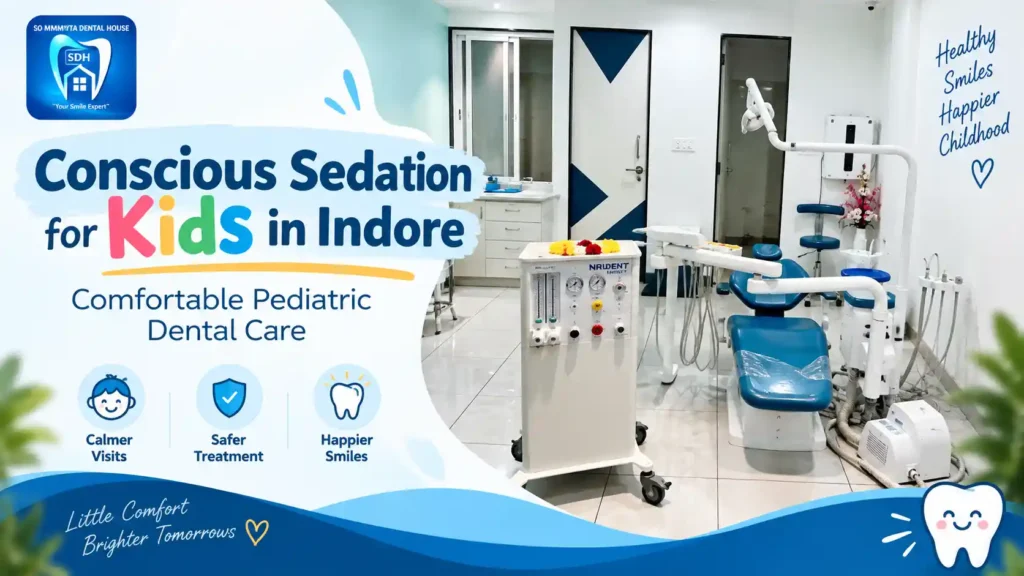
This is where conscious sedation can help. It is used to make the treatment experience calmer and more manageable for children who find it hard to cope with dental visits. At Sommyta Dental House, Indore, conscious sedation is offered as one of the options available to help children get through dental treatment more comfortably, based on a proper assessment by the dental team.
It is important to understand that conscious sedation is not used for every child or every visit. It is considered in suitable cases, after the dentist evaluates the child’s age, health history, and treatment needs. This article explains what conscious sedation is, when it may be used, how it is different from general anesthesia, and what parents can expect during the process.
What Is Conscious Sedation for Kids?
Conscious sedation is a technique used in dentistry to help a child feel more relaxed during a dental procedure. Depending on the level of sedation used, the child usually stays conscious and responsive, meaning they can still breathe on their own and respond to questions or simple instructions from the dental team.
The main purpose of conscious sedation is to reduce anxiety and discomfort, not to put the child to sleep completely. It is meant to make the treatment experience smoother, especially for children who struggle to stay still or who feel very anxious in a dental setting.
It is worth repeating that conscious sedation and general anesthesia are not the same thing. General anesthesia puts the child into a deep, sleep-like state where they are completely unaware of what is happening. Conscious sedation, on the other hand, keeps the child in a lighter, more responsive state. We will look at this difference in more detail a little later in this article.
In simple words, conscious sedation is a way to help manage dental anxiety in children, support comfortable dental treatment, and make pediatric sedation a smoother process for both the child and the parent.
Why Do Some Kids Need Sedation During Dental Treatment?
Not every child needs sedation for a dental visit. Many children sit through checkups and simple treatments without any trouble. But for some children, certain situations can make treatment difficult without additional support. This section looks at some of the common reasons.
Dental Anxiety and Fear
Some children feel nervous the moment they see a dental chair or hear a dental instrument. This fear can come from a previous uncomfortable visit, stories they have heard, or simply from being in a new and unfamiliar place. When anxiety is high, it can be hard for the child to cooperate, even for a simple cleaning.
Difficulty Sitting Through Treatment
Younger children, or children who find it hard to stay still for long periods, may struggle to sit through a treatment that takes more than a few minutes. Movement during treatment can make it harder for the dentist to work safely and accurately.
Strong Gag Reflex
Some children have a naturally strong gag reflex, which can make procedures involving X-rays, impressions, or work at the back of the mouth uncomfortable for them. This can make even routine treatment feel difficult.
Longer or More Involved Dental Procedures
Certain treatments simply take more time or involve more steps than a basic checkup. In such cases, helping the child stay calm and comfortable for the full duration of the visit becomes more important.
According to AAPD behavior guidance, factors such as a child’s anxiety level, ability to cooperate, the type of treatment needed, and their previous dental experiences are all considered part of an individualized behavior guidance plan. This means the decision to use sedation, or any other approach, is never a one-size-fits-all choice. It is based on what suits that particular child.
How Does Conscious Sedation Help During Dental Treatment?
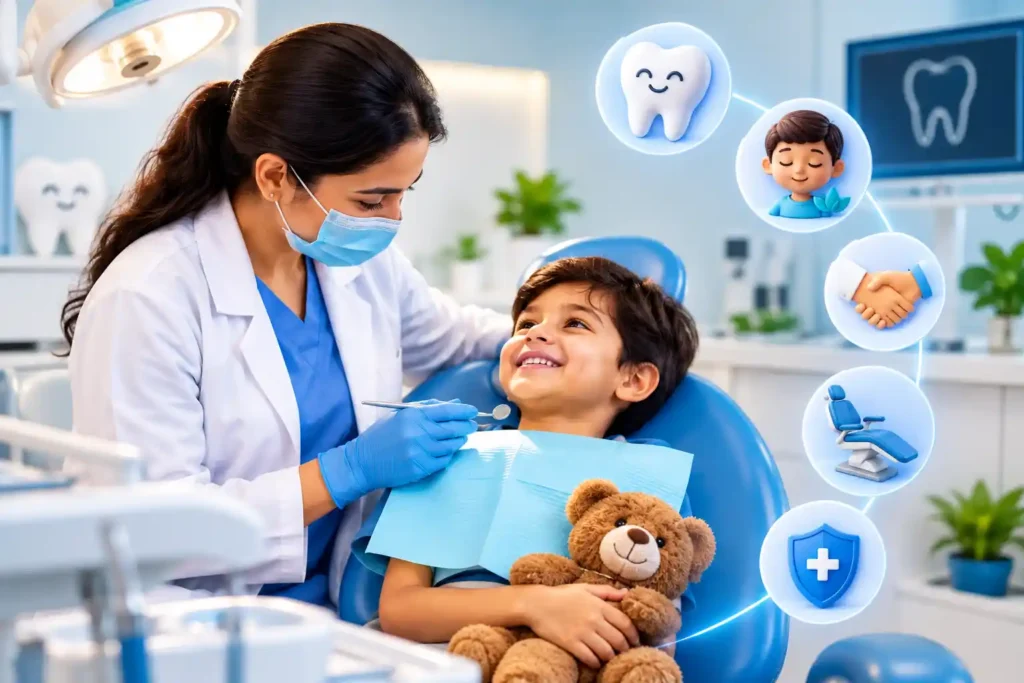
When used appropriately, conscious sedation can support a more positive dental visit in a few ways:
- Helps reduce anxiety before and during the procedure
- Makes communication between the child and the dental team easier
- Can improve the child’s cooperation during treatment
- May make some procedures more comfortable for the child
- Can help the dental team complete the necessary treatment more effectively
For example, nitrous oxide combined with oxygen is a technique recognised by the American Academy of Pediatric Dentistry (AAPD) as a way to help reduce anxiety and provide analgesia in appropriate pediatric patients. It has been used in pediatric dentistry for many years and is considered one of the more commonly used sedation options for children.
It is important to be honest here. Conscious sedation is not a guarantee of a completely pain-free or fear-free experience for every child, and no responsible dental practice should claim that any treatment is “100% painless” or “completely safe for every child.” Every child responds differently, and outcomes depend on the individual case. What conscious sedation does offer is a way to manage anxiety and discomfort more effectively in suitable situations, based on professional assessment.
Is Conscious Sedation Suitable for Every Child?
This is one of the most important questions parents should ask, and the honest answer is no. Conscious sedation is not automatically suitable or necessary for every child who visits the dentist.
Before recommending sedation, the dentist looks at several factors, including:
- The child’s age
- Their overall medical history
- Their level of anxiety
- The type of dental treatment required
- How well the child is likely to cooperate during the visit
Based on this assessment, the dentist decides whether sedation is appropriate, and if so, which method may suit the child best. This is why the same approach cannot be applied to every patient. Some children may only need simple behavior guidance techniques, such as a calm explanation of the procedure or a distraction technique, while others may benefit from a sedation option.
Parents should always feel comfortable discussing the risks, benefits, and alternatives with the dentist before deciding on any sedation method for their child. A good dental team will take the time to explain these clearly rather than rushing into a decision.
AAPD’s guidance on pediatric sedation places strong emphasis on a pre-sedation evaluation, appropriate monitoring during the procedure, trained personnel handling the sedation, the ability to manage the child’s airway if needed, and a proper recovery and discharge protocol after treatment. These are safety steps, not optional extras, and any clinic offering sedation dentistry should be following them.
Conscious Sedation vs General Anesthesia
Parents often confuse conscious sedation with general anesthesia, but the two are quite different. Here is a simple comparison to help understand the basic differences.
| Conscious Sedation | General Anesthesia |
| Can be used to help manage anxiety during treatment | Puts the child into a deeper state of unconsciousness |
| Used in selected dental cases | Considered for specific situations only |
| The child’s response level depends on the type and depth of sedation used | The patient is not conscious during the procedure |
| Requires individual assessment before use | Requires specialist-level planning and monitoring |
Both approaches have their own place in dentistry, and neither one is automatically “better” than the other. The right choice depends entirely on the child’s needs, the treatment involved, and the dentist’s professional judgment after a proper evaluation.
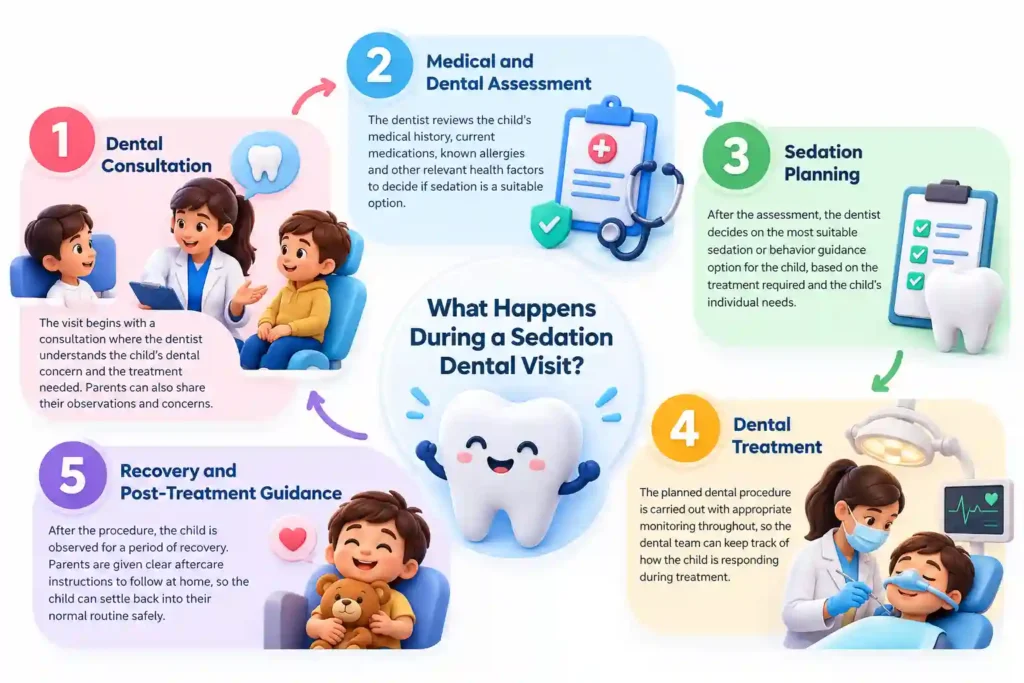
What Happens During a Sedation Dental Visit?
Parents often want to know what an actual sedation dental visit looks like from start to finish. While every clinic may have small variations in their process, it generally follows these steps.
1. Dental Consultation
The visit usually begins with a consultation where the dentist understands the child’s dental concern and the treatment that is needed. This is also a chance for parents to share their observations and concerns.
2. Medical and Dental Assessment
Before any sedation is considered, the dentist reviews the child’s medical history, current medications, known allergies, and other relevant health factors. This step helps the dentist understand whether sedation is a suitable option for that particular child.
3. Sedation Planning
Once the assessment is complete, the dentist decides on the most suitable sedation or behavior guidance option for the child, based on the treatment required and the child’s individual needs.
4. Dental Treatment
The planned dental procedure is carried out with appropriate monitoring throughout, so the dental team can keep track of how the child is responding during treatment.
5. Recovery and Post-Treatment Guidance
After the procedure, the child is observed for a period of recovery. Parents are given clear aftercare instructions to follow at home, so the child can settle back into their normal routine safely.
AAPD guidance highlights pre-sedation evaluation, ongoing monitoring, and a proper recovery period before discharge as some of the key safety steps in pediatric sedation. A dental clinic that follows this structured process is showing a genuine commitment to the child’s safety, not just their comfort.
Conscious Sedation Unit at Sommyta Dental House
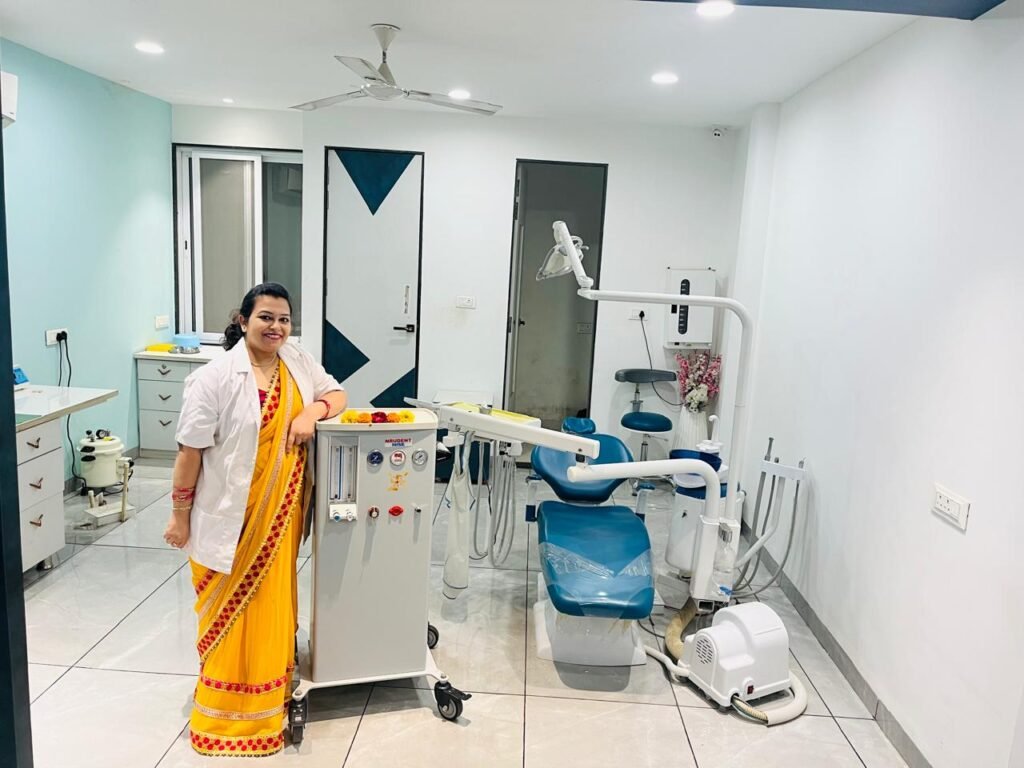
Sommyta Dental House, Indore, has introduced a dedicated conscious sedation unit as part of its pediatric dental care setup. The idea behind this is simple: to make dental visits more manageable for children who find it difficult to cope with treatment in a regular setting.
For children who experience dental anxiety, or who have had a hard time completing treatment in the past, this unit allows the dental team to discuss appropriate sedation options as part of an individual treatment plan, where suitable. As mentioned earlier, this is not a one-size-fits-all solution. Every child is assessed properly before any decision is made, and treatment is planned around what is right for that specific case.
The focus at Sommyta Dental House remains on building a more comfortable and less stressful dental experience for children, while keeping safety and proper assessment at the center of every decision.
Benefits of Conscious Sedation in Pediatric Dentistry
When used in suitable cases, conscious sedation can offer several practical benefits:
- Reduced dental anxiety during treatment
- Better cooperation from the child throughout the procedure
- A more comfortable overall dental experience
- Support for children who struggle with regular dental procedures
- Assistance in completing treatment in selected, more complex cases
- A more positive dental experience that can help reduce fear in future visits
These benefits, of course, depend on the individual child and the specific case. A proper assessment by the dentist remains the first and most important step.
How Parents Can Prepare Their Child for Sedation Dentistry
Parents play an important role in making the sedation process smoother for their child. Here is how they can help.
Share Your Child’s Medical History
Give the dentist a complete and accurate picture of your child’s health, including any past illnesses, surgeries, or ongoing conditions. This information helps the dentist decide what is safe and appropriate.
Tell the Dentist About Medicines and Allergies
Mention any medications your child is currently taking, along with any known allergies, even if they seem minor. This helps avoid any unwanted reactions during treatment.
Follow Pre-Treatment Instructions
The dental team may give specific instructions to follow before the appointment. It is important to follow these exactly as given, rather than assuming a general routine will work.
Do Not Give Food or Drinks Against the Dentist’s Instructions
Some sedation procedures may require the child to avoid certain foods or drinks before the appointment. These instructions can vary depending on the treatment and the child, so always follow what your dentist specifically advises rather than a general rule you may have read elsewhere.
Follow Post-Treatment Advice
After the procedure, the dental team will share instructions on how to care for your child at home during recovery. Following these carefully helps the child recover smoothly and comfortably.
For exact fasting timings, dosage details, or specific pre and post-treatment instructions, always rely on what the dental team at Sommyta Dental House tells you for your child’s particular case, rather than generic information found online.
Why Choose Sommyta Dental House for Pediatric Dentistry in Indore?
Choosing the right dental clinic for your child’s treatment matters, especially when sedation is being considered. Here is what sets Sommyta Dental House apart for pediatric dental care in Indore:
- A child-focused approach to dental care
- Experience in handling pediatric dental treatment
- A dedicated conscious sedation facility
- A strong focus on patient comfort throughout the visit
- Individual treatment planning for every child
- Professional dental assessment before any procedure
Families looking for a pediatric dentist in Indore, a kids dental clinic in Indore, or a pediatric dentist near Bengali Square, Kanadia Road, or Tilak Nagar, can consider Sommyta Dental House for their child’s dental needs.
Conscious Sedation for Kids Near Bengali Square, Indore
Sommyta Dental House is located at 29A, Ashish Nagar Road, Ashish Nagar, Indore, making it accessible for families living around Bengali Square, Kanadia Road, and Tilak Nagar. For parents in these areas looking for pediatric dental care that includes conscious sedation as an option, the clinic offers an assessment-based approach to help children get through treatment more comfortably.
If your child has been struggling with dental anxiety or finds it hard to sit through treatment, it may help to speak with the dental team about the options available, rather than avoiding dental visits altogether.
Frequently Asked Questions About Conscious Sedation for Kids
What is conscious sedation in pediatric dentistry?
Conscious sedation is a technique used to help children feel calmer and more comfortable during dental treatment. Depending on the sedation level used, the child usually remains conscious and can respond to the dental team throughout the procedure.
Why is sedation used for children during dental treatment?
Sedation may be considered for children who experience strong dental anxiety, struggle to sit still during treatment, have a strong gag reflex, or need a longer or more involved dental procedure. It is used to help manage these challenges, not as a routine part of every visit.
Is conscious sedation suitable for every child?
No, conscious sedation is not suitable for every child. The dentist assesses each child’s age, medical history, anxiety level, and treatment needs before deciding whether sedation is an appropriate option.
Is conscious sedation the same as general anesthesia?
No. Conscious sedation keeps the child in a lighter, responsive state, while general anesthesia puts the child into a deeper, sleep-like state of unconsciousness. They are used in different situations, based on the child’s needs.
What happens before a child receives sedation?
Before sedation, the dentist carries out a medical and dental assessment, reviewing the child’s health history, medications, and allergies. This helps determine whether sedation is safe and appropriate for that particular child.
Can sedation help children with dental anxiety?
In suitable cases, conscious sedation can help reduce anxiety and make the treatment experience more manageable for the child. However, it is only considered after a proper evaluation by the dentist.
Where can I find conscious sedation for kids in Indore?
Sommyta Dental House in Ashish Nagar, Indore, offers conscious sedation as part of its pediatric dental care services, for suitable cases based on individual assessment.
Does Sommyta Dental House provide conscious sedation for pediatric dental treatment?
Yes. Sommyta Dental House has a dedicated conscious sedation unit for pediatric dental care, where sedation options can be discussed for suitable cases as part of an individualized treatment plan.
A More Comfortable Dental Experience for Your Child
Dental anxiety in children is common, and it does not have to stand in the way of proper dental care. With a proper assessment and the right approach, treatment can become a much more manageable experience for both the child and the parent.
If your child finds it hard to cope with dental visits, consider speaking with the team at Sommyta Dental House, Indore, about the pediatric dental care and conscious sedation options available. A short consultation can help you understand what may work best for your child.