sommytadentalhouse

sommytadentalhouse

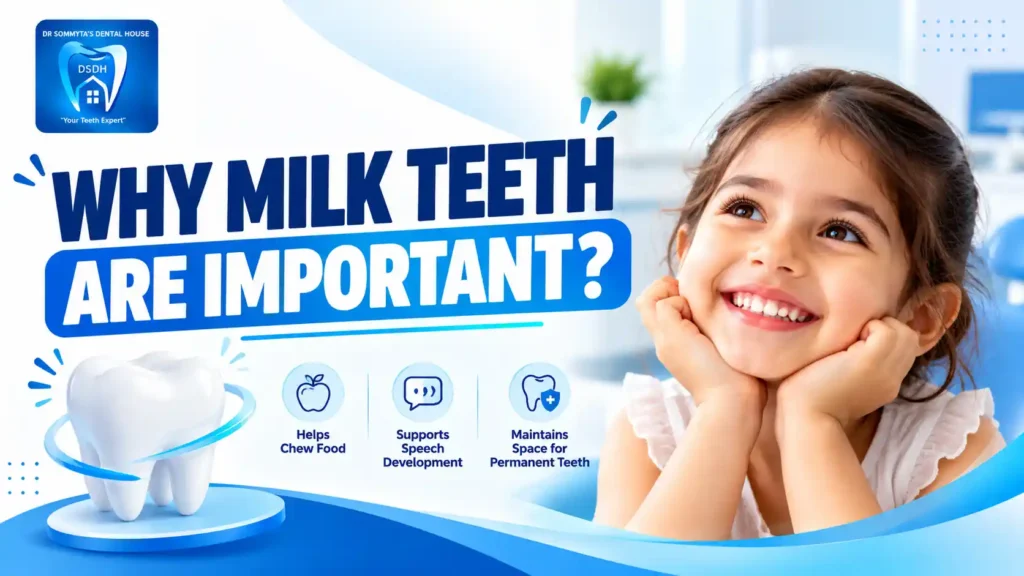
Why milk teeth is important for children's dental health

Why Are Milk Teeth Important? 7 Reasons Every Parent Should Know

Why Milk Teeth Are Important is a common question parents ask when their child’s first teeth begin to appear. Many parents believe that baby teeth do not need much care because they eventually fall out and are replaced by permanent teeth. However, milk teeth play an important role in a child’s growth and development. They help children chew food, speak clearly, maintain space for permanent teeth and develop healthy oral habits. At Dr. Sommyta’s Dental House, we believe that good oral health starts during childhood. Taking care of baby teeth from an early age can help children avoid dental discomfort and build healthy habits for the future. Let’s understand why milk teeth matter, what happens when they are neglected and how parents can protect their child’s dental health. What Are Milk Teeth? Milk teeth are the first set of teeth that develop in children. They are also known as baby teeth, primary teeth or deciduous teeth. These teeth usually begin to appear when a baby is around six months old, although the timing can vary from child to child. Most children develop a complete set of 20 milk teeth by around three years of age. These teeth remain in the mouth for several years before gradually falling out and making way for permanent teeth. Although milk teeth are temporary, they perform several important functions. They help children bite and chew food, support speech development and maintain space for adult teeth. According to the American Dental Association’s guide to baby teeth, primary teeth are an important part of children’s oral health and development. Difference Between Milk Teeth and Permanent Teeth Milk teeth and permanent teeth differ in size, number, structure and function. Understanding these differences helps parents realise why baby teeth need regular cleaning and professional dental care. Some important differences include: Parents should remember that temporary teeth need attention just like permanent teeth. Regular brushing, healthy food choices and dental checkups help protect children’s teeth during their growing years. When Do Babies Start Getting Milk Teeth? Most babies get their first tooth at around six months of age. However, some babies may get their first tooth earlier or later. The lower front teeth are usually the first to appear, followed by the upper front teeth. Other teeth gradually develop over the next few months. By around three years of age, most children have all 20 primary teeth. Parents can use the ADA tooth eruption charts to understand the usual order and approximate timing of baby teeth development. If parents have concerns about delayed tooth eruption or unusual changes, they should consult a dentist. How Many Milk Teeth Does a Child Have? A child normally has 20 milk teeth. These teeth are divided into three main types: Each type of tooth performs a different function. Incisors help children bite food, canines help tear food and molars help grind food into smaller pieces. Together, these teeth support normal chewing and oral development. This is why parents should take care of every milk tooth rather than focusing only on the front teeth. Why Are Milk Teeth Important for Children? Milk teeth are important for more than just chewing. They support speech development, help maintain space for permanent teeth and contribute to a child’s overall oral health. Healthy primary teeth also help children develop good eating and brushing habits. Here are seven important reasons why parents should take proper care of their child’s baby teeth. 1. Milk Teeth Help Children Chew Food Properly One of the main functions of milk teeth is to help children bite and chew food. Healthy teeth allow children to eat different types of food, including fruits, vegetables, grains and other nutritious meals. When a child has tooth decay or dental pain, chewing can become uncomfortable. Some children may avoid hard or crunchy foods because of dental discomfort. This can affect their normal eating habits and food choices. Healthy baby teeth help children: Parents should not ignore tooth pain or visible cavities in children. A dental examination can help identify the problem and guide suitable treatment. At Dr. Sommyta’s Dental House, parents can seek guidance about maintaining their child’s oral health and addressing dental concerns. 2. Milk Teeth Support Speech Development Milk teeth also play an important role in speech development. Children use their teeth, tongue and lips together to produce different sounds. Some sounds require the tongue to touch or move close to the front teeth. Healthy primary teeth support clear pronunciation and normal speech patterns. If a child loses front baby teeth too early because of decay or dental injury, it may affect the production of certain sounds in some cases. However, speech development also depends on several other factors. Parents should pay attention to their child’s speech and consult a dentist if early tooth loss or dental problems are affecting their comfort. Maintaining healthy milk teeth can support normal oral functions during childhood. 3. Milk Teeth Maintain Space for Permanent Teeth This is one of the most important reasons to protect milk teeth. Baby teeth act as natural space holders for permanent teeth. They help maintain the space in the jaw where adult teeth will eventually develop. When a baby tooth falls out naturally, the permanent tooth gradually moves into its position. However, if a milk tooth is lost too early because of severe decay or injury, nearby teeth may move towards the empty space. This can reduce the space available for the permanent tooth and may lead to alignment or eruption problems. Depending on the child’s age and dental condition, a dentist may recommend a space maintainer to preserve the space until the permanent tooth is ready to emerge. Parents should consult a dentist if their child loses a milk tooth much earlier than expected. Early examination can help determine whether any preventive treatment is needed. 4. Milk Teeth Support Healthy Jaw Development Milk teeth help children develop normal biting and chewing functions. As children grow, their jaws also develop to accommodate new teeth. Healthy

Why Are Milk Teeth Important? 7 Reasons Every Parent Should Know Read More »
Pediatric dentist in Indore providing dental care for a child

Pediatric Dentist in Indore | How to Choose the Right Dentist for Your Child

Every parent wants to see their child smile without pain. But many parents only think about a dentist when the child cries with a toothache at night. By then, the problem is often bigger than it needed to be. Baby teeth help your child eat, speak and grow with confidence. They also hold space for the permanent teeth that come later. That is why finding a good pediatric dentist in Indore matters so much. At Sommyta Dental House in Ashish Nagar, we meet many parents who ask the same thing: “How do I know which dentist is right for my child?” This guide answers that question in simple words. You will also learn when to book the first visit, which problems are common in kids, and what you can do at home to protect your child’s teeth. Quick Answer Who is the pediatric dentist in Indore for my child?The choice is a dentist who is properly qualified, has experience with children, keeps the clinic calm and child-friendly, explains everything clearly to parents, and focuses on prevention. Take your child for the first dental visit when the first tooth appears, and no later than the first birthday. Key Points at a Glance What Is a Pediatric Dentist and Why Does Your Child Need One? Understanding Children’s Dental Care A pediatric dentist, also called a kids dentist or child dentist, looks after the teeth, gums and mouth of children from infancy through the teenage years. Children’s dental care is not only about fixing cavities. It also includes teaching habits, watching how teeth and jaws grow, and helping children feel safe at the clinic. Many people say “pediatric dentist” and “kids dentist” to mean the same thing. What matters most is that the dentist is trained, patient and comfortable working with young children. How Children’s Dental Needs Differ from Adults A child’s mouth is changing all the time. Milk teeth fall out, permanent teeth come in, and the jaw keeps growing. Milk teeth also have thinner enamel than adult teeth, so decay can spread faster. Children also feel fear in a different way. A loud machine or a stranger in a mask can scare them. A dentist who speaks gently and explains each step in simple words can make a big difference. The Importance of Early Dental Check-Ups Early check-ups help the dentist spot small problems before they become painful. They also give parents a chance to ask questions about thumb sucking, bottle feeding, brushing and diet. India’s Ministry of Health and Family Welfare also treats oral health as a public health priority through the National Oral Health Division, which promotes prevention and awareness for all age groups. Prevention starts with a simple habit: regular check-ups. How to Choose the Best Pediatric Dentist in Indore for Your Child This is the most important part of the guide. There is no single “best” dentist for every family. The right dentist is the one who suits your child’s age, nature and needs. Use the points below as a checklist. Check the Dentist’s Qualifications and Experience Ask about the dentist’s degree and registration. A registered dentist holds a valid BDS degree, and many also have an MDS in pedodontics, which is the speciality for children. Ask how many years the dentist has treated children. You do not need to feel shy about asking. A good clinic is happy to answer. If a clinic avoids simple questions, that is a warning sign. Look for a Child-Friendly Dental Environment A child-friendly dental clinic does not have to be full of toys, but it should feel calm and clean. Look at how the staff speak to your child. Do they smile, explain and give the child time? A rushed or strict environment can make a child afraid of dentists for years. Understand the Available Dental Treatments Find out what the clinic can handle. A good kids dental clinic in Indore should offer regular check-ups, cavity checks, teeth cleaning and guidance on oral hygiene. For nervous children, ask whether the dentist has options to keep the child calm, such as gentle behaviour guidance or, in some cases, sedation. You can read more about calm and comfortable care in our guide to conscious sedation for kids in Indore. Ask About Treatment Options and Costs Before any treatment starts, ask the dentist to explain the problem, the options and the likely cost. A trustworthy dentist will tell you what is urgent and what can wait. You should never feel pushed into a decision. Cost matters, but cheap treatment that is rushed can cost more later. Look for clear, honest pricing and a clear plan. Check Patient Reviews and Communication with Parents Read Google reviews to see how other parents describe their experience. Look for comments about patience, painless care and clear explanations. Also notice how the clinic replies to calls and messages. Good communication before treatment usually means good communication during it. When Should You Take Your Child to a Dentist for the First Time? Recommended Age for a Child’s First Dental Visit Leading pediatric dental bodies, including the American Academy of Pediatric Dentistry, recommend the first visit when the first tooth appears, and no later than the first birthday. For most babies, that means somewhere between six and twelve months. At this visit the dentist usually checks the teeth and gums, talks about feeding and cleaning, and answers your questions. The baby may not need any treatment at all. Why You Should Not Wait for Tooth Pain Many parents think, “Milk teeth will fall anyway, so why worry?” This is a common myth. A decayed milk tooth can hurt, cause swelling, make it hard to eat and affect the permanent tooth underneath. Waiting for pain also means the problem has already grown. Early visits make treatment simpler and less scary for your child. How Often Should Children Have Dental Check-Ups? Most children are advised to visit the dentist about every six months, but this can change. A child with many

Pediatric Dentist in Indore | How to Choose the Right Dentist for Your Child Read More »

Dental care during pregnancy for expecting mothers

Dental Care During Pregnancy: Tips for Expecting Mothers

Pregnancy brings many changes to a woman’s body, including changes that can affect her teeth and gums. Hormonal fluctuations, morning sickness and changes in eating habits may increase the risk of dental problems. Dental care during pregnancy helps expecting mothers maintain good oral hygiene and identify potential problems early. At Sommyta Dental House, Indore, expecting mothers can seek guidance about gum problems, dental checkups, tooth pain and suitable treatment options. With proper oral hygiene and timely dental care, you can protect your teeth and gums throughout pregnancy. Why Is Dental Care Important During Pregnancy? Maintaining healthy teeth and gums is an important part of overall health. During pregnancy, hormonal changes can make gums more sensitive to plaque, while morning sickness and frequent snacking may increase the risk of tooth decay. Good oral hygiene helps control plaque, reduce gum inflammation and prevent dental problems from becoming more serious. Regular dental examinations also allow a dentist to identify cavities, gum disease and other oral health concerns at an early stage. Ignoring dental symptoms may lead to persistent discomfort, difficulty eating or the need for more extensive treatment. Pregnant women should therefore continue their routine dental care instead of waiting until after delivery. According to the American Dental Association (ADA), preventive, diagnostic and necessary restorative dental care can generally be provided during pregnancy with appropriate clinical precautions. How Does Pregnancy Affect Your Teeth and Gums? Pregnancy does not automatically cause dental problems. However, hormonal changes, morning sickness and changes in daily habits may increase the likelihood of certain oral health conditions. 1. Bleeding and Swollen Gums Pregnancy gingivitis is inflammation of the gums that may develop or worsen during pregnancy. Hormonal changes can increase the gums’ response to plaque bacteria, causing redness, swelling, tenderness and bleeding during brushing or flossing. To help protect your gums: Persistent bleeding should not be dismissed as a normal part of pregnancy. A dental examination can help identify the cause and determine whether professional cleaning or additional treatment is needed. 2. Tooth Decay During Pregnancy Changes in eating habits, frequent snacking, sugary foods and difficulties maintaining oral hygiene may increase the risk of cavities. Morning sickness can also make brushing uncomfortable, allowing plaque to accumulate. To reduce the risk of tooth decay, use fluoride toothpaste, limit frequent sugary snacks and drink water regularly. If you notice toothache, visible cavities or persistent sensitivity, arrange a dental examination. 3. Tooth Enamel Erosion From Morning Sickness Repeated vomiting exposes the teeth to stomach acid. Over time, this acid can soften and erode the protective enamel, increasing the risk of sensitivity and dental damage. After vomiting, rinse your mouth with plain water and avoid brushing immediately. Wait before brushing to allow the softened enamel to recover. If vomiting is frequent, speak with your healthcare provider about managing morning sickness and ask your dentist about additional ways to protect your teeth. 4. Dry Mouth Some pregnant women experience dryness or discomfort in the mouth. Possible causes include dehydration, changes in saliva production and certain medications. Saliva helps neutralise acids and protect teeth from decay. Drinking water regularly and maintaining good oral hygiene may help relieve mild dryness. If dry mouth continues despite adequate hydration, consult your dentist or healthcare provider to identify possible causes. 5. Pregnancy-Related Gum Growths Some women develop a small, red swelling or growth on the gums during pregnancy. These growths may be associated with hormonal changes and local irritation. Although some pregnancy-related gum growths are benign, other conditions can appear similar. A dentist should examine an unusual lump, persistent swelling or a growth that bleeds easily. Do not attempt to remove it yourself. For additional information, explore this guidance on oral health care during pregnancy. Is Dental Treatment Safe During Pregnancy? Many expecting mothers worry about the safety of dental procedures. However, routine examinations, professional cleaning, fillings and necessary dental treatments are generally considered safe during pregnancy when appropriate precautions are followed. The American College of Obstetricians and Gynecologists (ACOG) and the ADA support access to necessary dental care throughout pregnancy. Postponing treatment for a cavity, severe toothache or dental infection may allow the condition to worsen. Your dentist can assess your symptoms, explain the available options and recommend treatment based on your individual needs. Before your appointment, tell your dentist: Your dentist may coordinate with your obstetrician when your medical history or pregnancy complications make additional advice necessary. The CDC also confirms that dental care is safe and important during pregnancy. Can You Get Dental Cleaning During Pregnancy? Yes. Professional dental cleaning is generally considered safe during pregnancy. It removes plaque and tartar that brushing and flossing cannot completely eliminate. Cleaning may be particularly helpful if your gums are swollen, tender or bleeding. Your dentist will examine your gums and recommend routine cleaning or additional periodontal treatment according to your needs. Do not avoid a recommended dental cleaning simply because you are pregnant. If nausea or discomfort makes appointments difficult, tell your dentist so that suitable adjustments can be considered. Also read : Painless Dental Treatment Under Laughing Gas in Indore Are Dental X-Rays Safe During Pregnancy? Dental X-rays may be taken when they are clinically necessary. They help dentists identify problems that cannot always be diagnosed through a visual examination alone. Your dentist will consider the reason for the X-ray and follow appropriate radiation-safety procedures. Tell the dental team about your pregnancy before any imaging examination. If you are concerned about an X-ray, ask why it is needed and whether an alternative diagnostic method is appropriate. Do not delay essential diagnostic care without discussing the risks and benefits with your dentist. Can You Get a Filling or Root Canal During Pregnancy? Necessary restorative procedures, including fillings and root canal treatment, can generally be performed during pregnancy. A filling treats tooth decay and helps prevent further damage. Root canal treatment may be recommended when the inner tissue of a tooth becomes inflamed or infected. The appropriate procedure depends on the condition of your tooth, your symptoms and

Dental Care During Pregnancy: Tips for Expecting Mothers Read More »

Root Canal Treatment in Indore – Complete Guide

Root Canal Treatment in Indore: Complete Guide

Learn about root canal treatment in Indore, including its symptoms, procedure, cost factors, benefits, recovery and aftercare tips from dental experts. Tooth pain can affect your daily life in many ways. A small problem that starts as mild sensitivity can sometimes develop into severe pain, swelling, or infection if it is not treated at the right time. One of the most common treatments used to save an infected or badly damaged tooth is root canal treatment. If you are looking for root canal treatment in Indore, understanding the procedure, symptoms, cost factors, recovery, and aftercare can help you make a better decision about your dental health. Sommyta Dental House is a dental clinic in Indore where patients can consult a dental professional for tooth pain, dental infection, damaged teeth, sensitivity, and other oral health concerns. The right treatment depends on the condition of your tooth, so a proper dental examination is important before deciding whether root canal treatment is required. In this guide, we will explain everything you should know about root canal treatment, including how the procedure works, when you may need it, factors that affect the cost, recovery, aftercare, and how to choose a dental clinic in Indore. What Is Root Canal Treatment? Root canal treatment, commonly called RCT, is a dental procedure used to treat a tooth when the soft tissue inside the tooth, known as the dental pulp, becomes infected or severely damaged. Inside every natural tooth, there is a space containing nerves and blood vessels. When deep tooth decay, cracks, trauma, or repeated dental procedures affect this area, bacteria can reach the pulp and cause inflammation or infection. During a root canal procedure, the infected or damaged pulp is carefully removed. The root canals are then cleaned, disinfected, filled, and sealed. In many cases, the tooth may later require a dental crown to restore its strength and function. The main purpose of root canal treatment is to save the natural tooth instead of removing it. If you have continuous tooth pain or sensitivity, it is better to consult a dentist rather than waiting for the symptoms to disappear on their own. When Do You Need Root Canal Treatment? Not every toothache requires a root canal. However, certain symptoms can indicate that the infection or damage has reached the inner part of the tooth. A dental examination, along with an X-ray when required, can help determine the cause of the problem. Severe or Persistent Toothache Pain that continues for a long time or becomes worse while eating or chewing should not be ignored. Persistent dental pain can sometimes indicate infection or inflammation inside the tooth. Sensitivity to Hot and Cold Some people experience sharp or prolonged sensitivity when consuming hot tea, coffee, cold drinks, or ice cream. If the sensitivity continues even after the food or drink is removed, it may require professional evaluation. Pain While Chewing Pain when biting or chewing can be associated with tooth decay, a crack, infection, or inflammation around the tooth. Swollen or Tender Gums Swelling near a particular tooth can be a sign of infection. In some cases, an abscess may develop around the root of the tooth. Darkening of the Tooth A tooth that becomes darker than the surrounding teeth may have experienced internal damage. Trauma or infection can sometimes affect the pulp and change the colour of the tooth. Dental Abscess or Infection A dental abscess is a collection of pus caused by bacterial infection. It can cause pain, swelling, bad taste in the mouth, and sometimes fever. Dental infection should be treated promptly because delaying treatment can allow the infection to spread. If you notice any of these symptoms, visiting a root canal dentist in Indore for a proper examination is recommended. Also read : Bleeding Gums While Brushing | Causes, Symptoms & Treatment in Indore Why Is Root Canal Treatment Recommended? The primary reason for root canal treatment is to treat an infected or damaged tooth while preserving the natural tooth structure as much as possible. Some common reasons for RCT include: When an infected tooth is left untreated, the condition may become more complicated. In some cases, the infection can affect the surrounding bone and tissues. Root canal treatment can help remove the source of infection and restore the tooth so that it can continue to function. Root Canal Treatment Procedure: Step-by-Step Many patients feel nervous about RCT because they are not familiar with the process. Modern dental treatment focuses on diagnosis, infection control, pain management, and patient comfort. Here is a general overview of the root canal procedure. 1. Dental Examination and Diagnosis The dentist first examines the affected tooth and asks about your symptoms. Depending on the situation, an X-ray may be recommended to understand the condition of the tooth and surrounding structures. This step helps the dentist determine whether root canal treatment is appropriate. 2. Local Anaesthesia Local anaesthesia is generally used to numb the affected area before treatment. This helps make the procedure more comfortable for the patient. If you are worried about dental treatment or have dental anxiety, discuss your concerns with your dentist before the procedure. 3. Removing the Infected Pulp Once the tooth is properly numbed, the dentist creates access to the inside of the tooth. The infected or damaged pulp tissue is carefully removed. 4. Cleaning and Disinfecting the Root Canals The root canals are cleaned and shaped so that bacteria, infected tissue, and debris can be removed. Proper cleaning is an important part of successful root canal treatment. 5. Filling and Sealing the Tooth After cleaning, the canals are filled with a suitable dental material and sealed. This helps prevent bacteria from entering the treated area again. 6. Dental Crown or Final Restoration Depending on the tooth and the amount of remaining structure, a dental crown may be recommended after root canal treatment. A crown can help protect the tooth from further damage and restore its appearance and chewing function. Also read : Sensitive Teeth

Root Canal Treatment in Indore: Complete Guide Read More »

Dentist treating a patient for sensitive teeth causes, treatment and prevention

Sensitive Teeth Causes, Treatment and Prevention

Have you ever felt a sudden, sharp pain when drinking cold water, eating ice cream, having hot tea, or brushing your teeth? If this happens often, you may have sensitive teeth, also known as tooth sensitivity or dentin hypersensitivity. Tooth sensitivity is a common dental concern, but it should not always be ignored. In some cases, sensitivity can happen because of simple enamel wear or exposed tooth roots. In other cases, it may be linked to cavities, gum recession, a cracked tooth, worn fillings, or gum disease. The right treatment depends on what is causing the sensitivity. At Sommyta Dental House in Indore, patients with sensitive teeth can get their teeth and gums examined to understand the actual cause of their discomfort. The clinic provides dental checkups and X-rays along with treatments such as teeth cleaning and polishing, root canal treatment, crowns and bridges, and other dental care services. In this guide, we will explain the common sensitive teeth causes, what tooth sensitivity feels like, why teeth become sensitive to hot and cold foods, available treatment options, home care tips, and ways to prevent sensitivity from getting worse. What Are Sensitive Teeth? Sensitive teeth are teeth that react with a short, sharp sensation when they come in contact with certain triggers. These triggers may include cold water, hot drinks, sweet foods, acidic foods, cold air, brushing, or flossing. The medical term often used for this condition is dentin hypersensitivity. To understand why sensitivity happens, it helps to know a little about the structure of a tooth. The outer part of the visible tooth is protected by enamel. Under the enamel is a layer called dentin. Dentin contains very small channels called tubules. When the protective enamel becomes thin or when the tooth root becomes exposed because of gum recession, these tubules can become exposed to the outside environment. When hot, cold, sweet, acidic, or other stimuli reach these exposed areas, they can trigger a painful sensation. This is why a person may feel a sudden pain after taking a sip of cold water or eating something sweet. A healthy tooth should not normally cause repeated sharp pain during everyday eating and drinking. If sensitivity is becoming frequent, it is worth finding out why it is happening instead of simply avoiding cold or hot foods. What Does Tooth Sensitivity Feel Like? Tooth sensitivity can feel different from person to person, but the most common symptom is a quick, sharp pain. You may notice sensitivity when: For many people, the pain stops shortly after the trigger is removed. However, if the pain continues for a long time, happens without any obvious trigger, becomes severe, or is associated with swelling or pain while chewing, it may indicate a dental problem that needs professional attention. Also read : Painless Dental Treatment Under Laughing Gas in Indore What Causes Sensitive Teeth? There are many possible sensitive teeth causes. The important thing is to understand that sensitivity is often a symptom rather than a disease on its own. Here are some of the most common reasons teeth become sensitive. 1. Worn Tooth Enamel Enamel is the hard outer covering of the tooth. It protects the softer structures underneath it. Although enamel is extremely strong, it can become thinner or worn over time. Frequent exposure to acidic foods and drinks, aggressive brushing, and other forms of tooth wear can contribute to enamel loss. When enamel becomes thinner, the dentin underneath may become more exposed. Since dentin contains microscopic tubules that can transmit sensations toward the inner part of the tooth, exposure can make the tooth more sensitive. For example, someone who regularly drinks acidic beverages several times a day may gradually notice that cold drinks start causing discomfort. This does not mean that one glass of an acidic drink will suddenly damage your teeth. The concern is repeated exposure over time. Protecting your enamel is therefore an important part of preventing tooth sensitivity. 2. Gum Recession Your gums cover and protect the roots of your teeth. When gums recede, part of the tooth root can become exposed. The root does not have the same thick enamel protection as the crown of the tooth. As a result, exposed roots can be much more sensitive to cold, hot, sweet, and even touch. Gum recession can happen for different reasons. Aggressive brushing, gum disease, and other factors can contribute to it. If you notice that your teeth look longer than before or you can see a small area near the gum line that was not visible earlier, talk to a dentist. Treating the cause of gum recession is more important than simply trying to cover up the sensitivity. 3. Cavities and Tooth Decay A cavity can also cause tooth sensitivity. Tooth decay starts by damaging the outer tooth structure. As the decay progresses deeper, it can come closer to the dentin and eventually the pulp, where the nerves and blood vessels are located. A person with a cavity may notice sensitivity when eating: Sometimes the sensitivity is the first sign that something is wrong. If one particular tooth suddenly becomes sensitive, especially if it also has a visible dark spot, hole, food getting stuck, or pain while chewing, it should be examined. A toothpaste for sensitive teeth may reduce discomfort, but it cannot repair a cavity. The underlying decay needs appropriate dental treatment. 4. Cracked or Fractured Teeth A cracked tooth can cause sensitivity, especially when you bite or chew. Some cracks are easy to see, but others may be very small and difficult to identify without a dental examination. A cracked tooth may cause: If sensitivity is limited to one tooth and seems to happen during chewing, do not assume it is simple tooth sensitivity. A dentist should check the tooth for cracks or other damage. 5. Worn or Damaged Dental Fillings Dental fillings are used to restore teeth affected by decay or damage. Over time, a filling can wear down, become damaged, or develop problems around its

Sensitive Teeth Causes, Treatment and Prevention Read More »

Painless dental treatment under laughing gas at Sommyta Dental House in Indore

Painless Dental Treatment Under Laughing Gas in Indore

If the thought of sitting in a dental chair makes your palms sweat, you’re not alone. A large number of patients who walk into Sommyta Dental House in Indore admit the same thing before their first appointment: “Doctor, mujhe dentist se dar lagta hai.” Dental fear is one of the most common reasons people delay treatment until a small cavity turns into a root canal, or a mild gum problem turns into something far more painful — a pattern that government oral health data for India has also flagged as a major reason for the country’s high burden of untreated dental disease. This is exactly where laughing gas, also known as nitrous oxide, has changed the way dentistry is practiced. At Sommyta Dental House, we’ve seen firsthand how a simple, safe, and well-monitored gas can turn a nervous, tense patient into someone who is calm enough to get treated without dreading every second of it. In this blog, we’ll walk you through what laughing gas actually is, how it helps during dental procedures, who it’s suitable for, and why more dentists in Indore — including our team — are recommending it for anxious patients, children, and even routine treatments that people have been avoiding for years. What Is Laughing Gas in Dentistry? Laughing gas is the common name for nitrous oxide, a colorless, mildly sweet-smelling gas that has been used in dentistry and medicine for well over a century. It’s mixed with oxygen and given to the patient through a small nasal mask that sits comfortably over the nose during the procedure. Once inhaled, nitrous oxide works quickly, usually within a few minutes, to produce a light, relaxed, almost floaty feeling. Patients often describe it as a sense of calm — some even find themselves smiling or giggling a little, which is how the gas got its playful nickname. Unlike general anesthesia, the patient stays fully conscious and aware throughout the treatment, able to respond to the dentist and breathe entirely on their own. What makes laughing gas particularly popular in modern dental clinics, including ours at Sommyta Dental House, is how controllable and short-acting it is. The dentist can adjust the concentration in real time depending on how relaxed or alert the patient needs to be, and once the mask is removed, the effects wear off within minutes. Also Read : Bleeding Gums While Brushing | Causes, Symptoms & Treatment in Indore How Does Laughing Gas Help During Dental Treatment? Most people assume dental fear is only about pain, but in reality, it’s often about the anticipation of pain — the sound of the drill, the feeling of instruments in the mouth, or simply not being in control of the situation. Laughing gas addresses this anxiety directly. Here’s how it typically helps during a dental visit at Sommyta Dental House: It’s worth being clear here: laughing gas itself is not a painkiller in the way local anesthesia is. Its main role is to calm the mind and reduce the perception of discomfort, while the numbing injection handles the actual pain control at the treatment site. Together, they make the overall experience significantly more comfortable than treatment without any sedation support. Is Dental Treatment Under Laughing Gas Painless? This is probably the most common question we get at Sommyta Dental House, so let’s answer it honestly. No responsible dental clinic can promise a completely pain-free experience for every single patient in every single situation — bodies and pain thresholds differ, and some procedures naturally involve more sensation than others. What we can say, based on years of clinical experience, is that laughing gas helps make treatment considerably more comfortable by reducing anxiety, easing muscle tension, and taking the “edge” off the entire visit. Combined with proper local anesthesia — which is still used to numb the specific area being treated — most patients under laughing gas report barely noticing the procedure at all. Many describe it as one of the calmest dental visits they’ve had. So while we avoid making absolute claims like “100% painless,” what we can confidently say is that it is one of the most effective, safe tools available today for anxious patients who want a smoother, gentler treatment experience. Who Can Benefit From Laughing Gas During Dental Treatment? Laughing gas isn’t reserved for only the most fearful patients — it’s suitable for a wide range of people. At Sommyta Dental House, we usually recommend it for: Patients with dental anxiety or phobia — If you’ve avoided the dentist for years because of fear, laughing gas can make it possible to finally get the treatment you need without the dread. Children undergoing kids’ dentistry — Kids often struggle to sit still or stay calm during procedures. Laughing gas is widely used in pediatric dentistry because it’s gentle, quick-acting, and wears off fast, letting children go back to their normal activities soon after. Patients with a strong gag reflex — For people who find it hard to tolerate instruments or impressions in their mouth, the relaxed state induced by laughing gas can make the process much more manageable. Patients undergoing longer procedures — Treatments like root canal therapy or multiple extractions in one sitting can feel mentally exhausting. Laughing gas helps patients stay relaxed through longer chair time. First-time patients — If you’re visiting a dentist for the first time in years (or ever), laughing gas can help ease you into the experience without overwhelming anxiety. That said, it’s not automatically suitable for everyone. Patients with certain respiratory conditions, some pregnant patients, or those on specific medications should discuss their medical history with the dentist beforehand. At Sommyta Dental House, we always review your health history before recommending any sedation option, including laughing gas. What Dental Treatments Can Be Done Under Laughing Gas? One of the biggest advantages of laughing gas is how versatile it is. It can be used across a wide range of procedures we offer at Sommyta Dental House, including: Essentially, if a procedure

Painless Dental Treatment Under Laughing Gas in Indore Read More »

Bleeding gums while brushing causes symptoms and treatment in Indore

Bleeding Gums While Brushing | Causes, Symptoms & Treatment in Indore

Brushing your teeth is supposed to be a simple, everyday habit  not something that leaves pink or red on your toothbrush. Yet a lot of people spit out blood while brushing and just shrug it off, thinking it will go away on its own. Sometimes it does. Sometimes it doesn’t, and it’s actually your gums trying to tell you something. Occasional, mild bleeding can happen if you brushed a little too hard, or if you just started flossing after months of not doing it. That’s usually nothing to panic about. But when your gums bleed almost every time you brush, or the bleeding keeps coming back week after week, it’s often connected to gum inflammation or early gum disease that needs attention rather than time. If you live in Indore and this has been happening to you for a while, this guide walks you through why it happens, what symptoms to watch for, and when it’s time to actually see a dentist instead of waiting it out. Clinics such as Sommyta Dental House in Indore see this complaint fairly often, and in most cases, it’s very treatable once it’s caught early. Quick Answer Why do gums bleed while brushing? The most common reason is plaque buildup along the gumline, which irritates the gum tissue and causes inflammation known as gingivitis. Brushing too hard, using a hard-bristled brush, vitamin deficiencies, hormonal changes, and smoking can also cause bleeding gums. If bleeding continues for more than a week despite gentle brushing, it’s advisable to get a dental checkup, since untreated gum inflammation can progress to periodontitis, a more serious form of gum disease. Why Do Gums Bleed While Brushing? There isn’t just one reason gums start bleeding  it’s usually a combination of how you’re brushing and what’s happening under the gumline. Here are the most common causes dentists come across. Plaque and Tartar Buildup Every day, a thin, sticky film called plaque forms on your teeth. It’s made up of bacteria, food particles, and saliva. If you brush and floss well, most of it comes off. But if plaque is left sitting near the gumline for too long, it hardens into tartar (also called calculus), which a toothbrush simply cannot remove. This buildup irritates the gum tissue right where it meets the tooth. The gums become inflamed, more sensitive, and start to bleed the moment you brush over them  even gently. This is, by far, the single biggest reason people experience bleeding gums. Brushing Too Hard Ironically, brushing harder doesn’t clean your teeth better  it just damages your gums. A hard-bristled toothbrush combined with aggressive scrubbing can wear down the gum tissue, making it thinner and more prone to bleeding. Over time, this can also contribute to gum recession, which is a separate problem on its own. Gum Infection and Inflammation When plaque isn’t cleaned properly for an extended period, the gum tissue reacts by becoming red, puffy, and tender. This is called gingivitis  the earliest and mildest form of gum disease. At this stage, bleeding is one of the clearest warning signs, and the good news is that gingivitis is fully reversible with proper cleaning and better home care. Common Symptoms That May Occur With Bleeding Gums Bleeding rarely shows up completely on its own. It’s usually accompanied by a few other signs that, together, give a clearer picture of what’s going on. Red or Swollen Gums Healthy gums are usually a pale pink and firm to the touch. When gums turn red or look puffy along the edges, it’s a sign of inflammation. Tender or Painful Gums Some people notice mild soreness while eating or brushing, especially around the same spots that bleed. Persistent Bad Breath Bacteria trapped under the gumline and in plaque produce a smell that doesn’t go away with mouthwash or mints  it keeps returning because the source hasn’t been treated. Receding Gums Over time, inflamed or infected gums can start pulling away from the tooth surface, making teeth look slightly longer than before. Loose Teeth or Changes in Tooth Position This is usually a later-stage symptom and suggests the bone and tissue supporting the teeth have already been affected. It’s a strong signal that professional treatment shouldn’t be delayed further. If you’re also dealing with sharp discomfort when eating something cold or sweet, it’s worth reading our guide on sensitive teeth treatment near Bengali Square, since gum recession and sensitivity often show up together. Can Bleeding Gums Be a Sign of Gum Disease? This is the question most people are actually trying to answer when they search for bleeding gums online  and the honest answer is: sometimes, yes. Gingivitis – The Early Stage of Gum Disease Gingivitis happens when plaque along the gumline causes inflammation. It’s extremely common, and the encouraging part is that it’s completely reversible. With consistent brushing, flossing, and a professional cleaning to remove buildup a toothbrush can’t reach, gums usually return to normal within a couple of weeks. The mistake most people make is ignoring it because it “doesn’t hurt.” Gingivitis on its own is rarely painful, which is exactly why it tends to go unnoticed until it progresses further. Periodontitis – Advanced Gum Disease If gingivitis isn’t treated, the inflammation can spread deeper and start affecting the structures that actually hold your teeth in place  the ligaments and the bone underneath. This stage is called periodontitis. Unlike gingivitis, periodontitis can cause permanent damage: gum recession, bone loss around the teeth, and in more advanced cases, loose teeth that may eventually need extraction. According to the National Institute of Dental and Craniofacial Research (NIDCR), periodontal disease is largely preventable through good oral hygiene and regular dental visits, but it does require professional treatment once it sets in  it won’t resolve with brushing alone. This is really the key difference: gingivitis can often be managed and reversed at home with better habits, while periodontitis needs a dentist’s involvement. Other Possible Causes of Bleeding Gums Not every case of bleeding gums is about

Bleeding Gums While Brushing | Causes, Symptoms & Treatment in Indore Read More »

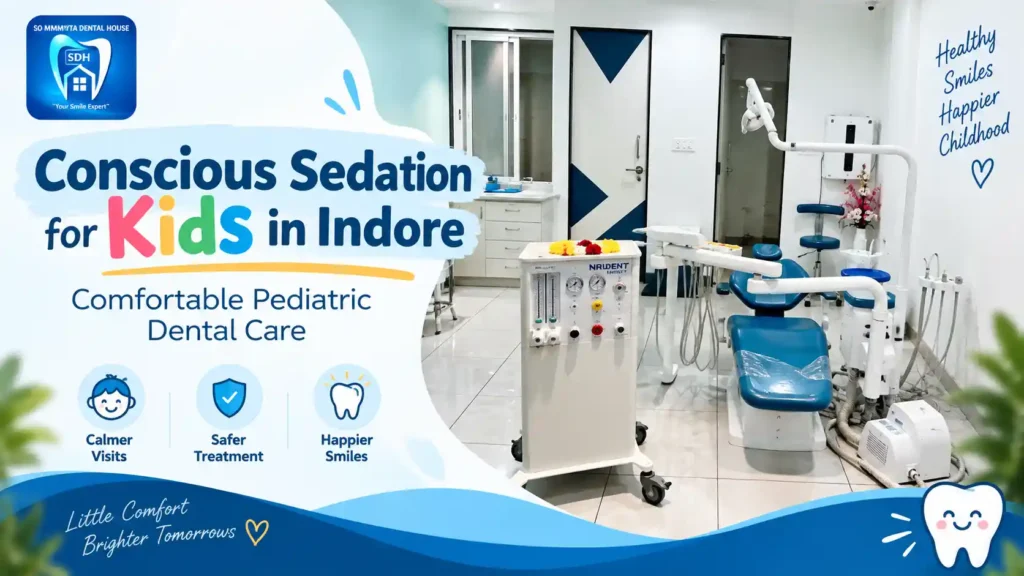
Conscious sedation for kids in Indore for comfortable pediatric dental care at Sommyta Dental House

Conscious Sedation for Kids in Indore | Comfortable Pediatric Dental Care

A trip to the dentist can feel scary for a lot of children. The sound of the drill, the bright light, or simply sitting still in a new chair can make a child nervous, and that nervousness sometimes turns into full-on fear. For parents, this can make even a simple checkup feel like a battle. This is where conscious sedation can help. It is used to make the treatment experience calmer and more manageable for children who find it hard to cope with dental visits. At Sommyta Dental House, Indore, conscious sedation is offered as one of the options available to help children get through dental treatment more comfortably, based on a proper assessment by the dental team. It is important to understand that conscious sedation is not used for every child or every visit. It is considered in suitable cases, after the dentist evaluates the child’s age, health history, and treatment needs. This article explains what conscious sedation is, when it may be used, how it is different from general anesthesia, and what parents can expect during the process. What Is Conscious Sedation for Kids? Conscious sedation is a technique used in dentistry to help a child feel more relaxed during a dental procedure. Depending on the level of sedation used, the child usually stays conscious and responsive, meaning they can still breathe on their own and respond to questions or simple instructions from the dental team. The main purpose of conscious sedation is to reduce anxiety and discomfort, not to put the child to sleep completely. It is meant to make the treatment experience smoother, especially for children who struggle to stay still or who feel very anxious in a dental setting. It is worth repeating that conscious sedation and general anesthesia are not the same thing. General anesthesia puts the child into a deep, sleep-like state where they are completely unaware of what is happening. Conscious sedation, on the other hand, keeps the child in a lighter, more responsive state. We will look at this difference in more detail a little later in this article. In simple words, conscious sedation is a way to help manage dental anxiety in children, support comfortable dental treatment, and make pediatric sedation a smoother process for both the child and the parent. Why Do Some Kids Need Sedation During Dental Treatment? Not every child needs sedation for a dental visit. Many children sit through checkups and simple treatments without any trouble. But for some children, certain situations can make treatment difficult without additional support. This section looks at some of the common reasons. Dental Anxiety and Fear Some children feel nervous the moment they see a dental chair or hear a dental instrument. This fear can come from a previous uncomfortable visit, stories they have heard, or simply from being in a new and unfamiliar place. When anxiety is high, it can be hard for the child to cooperate, even for a simple cleaning. Difficulty Sitting Through Treatment Younger children, or children who find it hard to stay still for long periods, may struggle to sit through a treatment that takes more than a few minutes. Movement during treatment can make it harder for the dentist to work safely and accurately. Strong Gag Reflex Some children have a naturally strong gag reflex, which can make procedures involving X-rays, impressions, or work at the back of the mouth uncomfortable for them. This can make even routine treatment feel difficult. Longer or More Involved Dental Procedures Certain treatments simply take more time or involve more steps than a basic checkup. In such cases, helping the child stay calm and comfortable for the full duration of the visit becomes more important. According to AAPD behavior guidance, factors such as a child’s anxiety level, ability to cooperate, the type of treatment needed, and their previous dental experiences are all considered part of an individualized behavior guidance plan. This means the decision to use sedation, or any other approach, is never a one-size-fits-all choice. It is based on what suits that particular child. How Does Conscious Sedation Help During Dental Treatment? When used appropriately, conscious sedation can support a more positive dental visit in a few ways: For example, nitrous oxide combined with oxygen is a technique recognised by the American Academy of Pediatric Dentistry (AAPD) as a way to help reduce anxiety and provide analgesia in appropriate pediatric patients. It has been used in pediatric dentistry for many years and is considered one of the more commonly used sedation options for children. It is important to be honest here. Conscious sedation is not a guarantee of a completely pain-free or fear-free experience for every child, and no responsible dental practice should claim that any treatment is “100% painless” or “completely safe for every child.” Every child responds differently, and outcomes depend on the individual case. What conscious sedation does offer is a way to manage anxiety and discomfort more effectively in suitable situations, based on professional assessment. Is Conscious Sedation Suitable for Every Child? This is one of the most important questions parents should ask, and the honest answer is no. Conscious sedation is not automatically suitable or necessary for every child who visits the dentist. Before recommending sedation, the dentist looks at several factors, including: Based on this assessment, the dentist decides whether sedation is appropriate, and if so, which method may suit the child best. This is why the same approach cannot be applied to every patient. Some children may only need simple behavior guidance techniques, such as a calm explanation of the procedure or a distraction technique, while others may benefit from a sedation option. Parents should always feel comfortable discussing the risks, benefits, and alternatives with the dentist before deciding on any sedation method for their child. A good dental team will take the time to explain these clearly rather than rushing into a decision. AAPD’s guidance on pediatric sedation places strong emphasis on a pre-sedation evaluation, appropriate monitoring during

Conscious Sedation for Kids in Indore | Comfortable Pediatric Dental Care Read More »

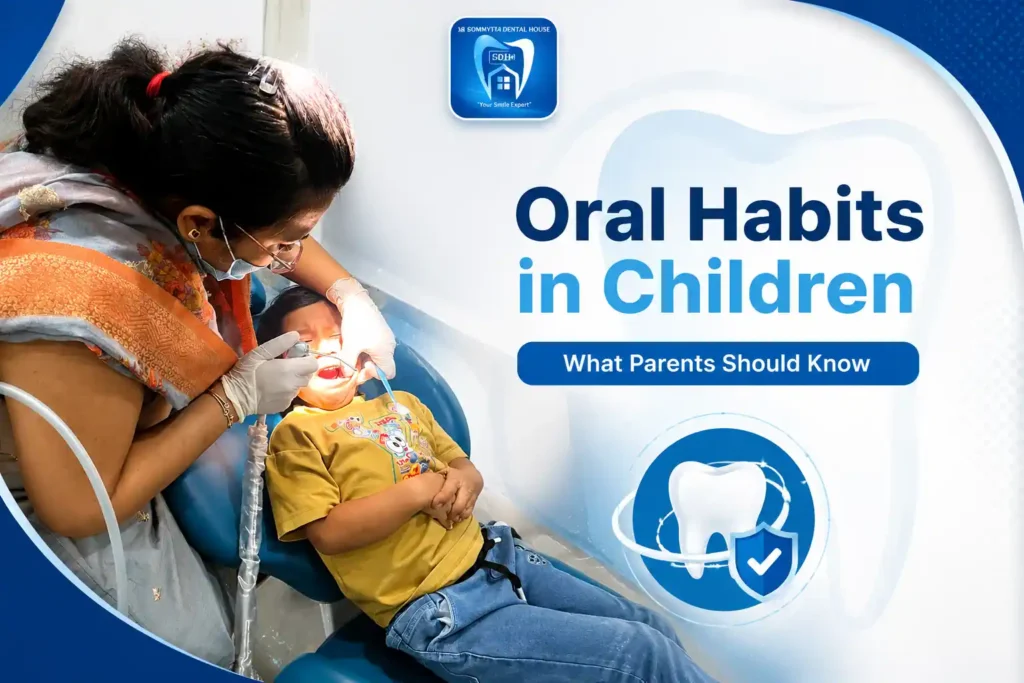
Sommyta Dental House dentist examining a child for oral habits and dental development

Common Oral Habits in Children | How They Affect Dental Development

Thumb sucking, mouth breathing, tongue thrusting, and teeth grinding are some of the most common oral habits in children. Most of these habits are a normal part of early childhood and fade away on their own. The concern is not the habit itself but how long it continues, how often it happens, and how forcefully it is done. A habit a toddler outgrows by age three looks very different from the same habit continuing at age seven, once permanent teeth start coming in. This is when persistent oral habits can start to influence tooth alignment and jaw development, which is why parents are often advised to consider an early dental evaluation once a habit continues past the age it would normally stop. Which Oral Habits Can Affect a Child’s Dental Development? Children can develop several different oral habits, and each one affects the growing mouth in its own way. Understanding what each habit involves, and how it is different from the next, makes it easier for parents to know what is normal and what deserves a closer look from a dentist. Thumb Sucking and Its Effects on Children’s Teeth Thumb sucking is one of the most recognisable oral habits in early childhood, and it is completely normal in infants and toddlers. Some babies even suck their thumb before birth. It gives young children a sense of comfort and security, and many turn to it instinctively when they are tired, bored, or adjusting to something new, such as starting daycare or a new sibling arriving at home. In most children, thumb sucking effects on teeth are minimal because the habit itself is short-lived. It is generally considered normal up to around age two to four, and as a child’s ability to self-soothe develops, the thumb sucking habit usually fades on its own without leaving any lasting mark on the teeth. Problems tend to appear when the habit continues after the front permanent teeth begin to erupt, generally from around age six onward. Persistent, forceful thumb sucking places steady pressure on the front teeth and the roof of the mouth. Over time, this pressure can lead to an open bite, where the upper and lower front teeth do not meet when biting down, or to protruding front teeth and a narrower upper arch. The intensity of the sucking matters a great deal here. A child who rests the thumb passively in the mouth is far less likely to see these changes than a child who sucks vigorously and frequently. This connection between thumb sucking and dental development has been studied extensively, and dental professionals generally agree that the duration and intensity of the habit, rather than its mere presence, determine the outcome. Parents can gently discourage the habit by praising the child during periods without thumb sucking, addressing the underlying reason for it such as anxiety or a need for comfort, and involving the child in age-appropriate ways to stop it, such as a simple reward chart. If the habit continues beyond age four, or if changes in tooth position are already visible, it is a good time to speak with a pediatric dentist. Mouth Breathing in Children: Can It Affect Dental and Facial Development? Mouth breathing in children happens when a child breathes primarily through the mouth instead of the nose, both while awake and during sleep. It is often easy for parents to miss at first, since it can look like a simple habit rather than a sign of something else happening in the airway. Common signs of a child breathing through the mouth include sleeping with the mouth open, snoring, a dry mouth on waking, cracked or chapped lips, and a general preference for mouth breathing even while resting quietly during the day. Some children develop this pattern because their nasal airway is partially blocked, whether from seasonal allergies, enlarged tonsils or adenoids, or ongoing nasal congestion that has turned into a long-term habit rather than an occasional cold symptom. Chronic mouth breathing does not only affect how a child takes in air. Because the tongue rests differently in the mouth during mouth breathing compared to normal nasal breathing, it can gradually influence how the jaw and palate grow, and prolonged mouth breathing has been linked to changes in facial development in children, including a longer, narrower facial profile in some cases. This is one of the more overlooked mouth breathing dental problems, since the effect builds up slowly and is not always obvious in the early stages. Because of this, mouth breathing should never simply be dismissed as a bad habit that a child will grow out of. It often points to an underlying airway issue that benefits from a proper evaluation, whether from a dentist, a pediatrician, or an ENT specialist, depending on the underlying cause. Tongue Thrusting and Its Impact on Teeth Alignment Tongue thrusting in children refers to a swallowing pattern where the tongue pushes forward against or between the teeth, rather than pressing up against the roof of the mouth the way it should during a normal swallow. Because swallowing is an automatic action that happens dozens of times a day, even a mild tongue thrust habit repeats itself constantly. This repetition is exactly why a persistent tongue thrust can gradually affect teeth alignment. The forward pressure on the front teeth, applied thousands of times over months and years, can contribute to an open bite or noticeable spacing between the upper front teeth. Tongue thrusting effects on teeth are often similar to those seen with prolonged thumb sucking, since both involve sustained pressure on the same group of teeth. Abnormal tongue movement in children is also sometimes associated with speech concerns, particularly with sounds like “s” and “z,” since the position of the tongue plays a direct role in how these sounds are formed. Tongue thrusting frequently overlaps with other oral habits, such as prolonged thumb sucking or mouth breathing, so a dentist evaluating one habit will usually check for the others as

Common Oral Habits in Children | How They Affect Dental Development Read More »

Sedation Dentistry Near Me in Indore thumbnail featuring a relaxed dental patient receiving safe and comfortable treatment at Sommyta Dental House near Bengali Square, Kanadia Road, and Tilak Nagar.

Sedation Dentistry Near Me in Indore

If you’re searching for sedation dentistry near me in Indore, you’re probably looking for a comfortable and stress-free dental experience. Many children and adults delay treatment because of dental fear. At Sommyta Dental House, patients receive personalized dental care focused on comfort, safety, and modern treatment options. Conveniently located near Bengali Square, Kanadia Road, and Tilak Nagar in Indore, the clinic offers a patient-first approach to help make dental visits more relaxed and stress-free. What Is Sedation Dentistry? Sedation dentistry is an approach that helps patients stay calm and comfortable during dental procedures. Instead of feeling tense or fearful in the chair, patients experience a sense of relaxation during treatment, making even longer or more complex procedures easier to manage. The goal of sedation dentistry is simple: comfortable dental care without the stress that usually comes with a dental visit. Depending on the level of anxiety and the treatment required, a dentist may recommend conscious sedation, which keeps the patient relaxed while still able to respond and communicate throughout the procedure. This makes anxiety-free treatment possible for people who would otherwise avoid the dentist altogether. Who Can Benefit from Sedation Dentistry? Sedation dentistry isn’t only for people with severe dental phobia. It can help a wide range of patients feel more at ease during treatment. People Who Can Benefit Include: Also Read : Prevention Is Better Than Filling | Fluoride Treatment Kyu Zaruri Hai? Types of Sedation Used in Dentistry There are different levels of sedation, and the right option depends on the patient’s anxiety level, medical history, and the treatment being performed. Nitrous Oxide (Laughing Gas) Nitrous oxide is a mild, inhaled sedation option that helps patients relax within minutes. It wears off quickly, allowing most patients to resume normal activities soon after their appointment. This makes it a popular choice for both children and adults with mild to moderate anxiety. Oral Sedation Oral sedation involves taking a prescribed medication before the appointment to help the patient feel calm and relaxed. This option is often used for patients with moderate dental anxiety or those undergoing longer procedures. IV Sedation For certain cases, IV sedation may be considered to achieve a deeper level of relaxation. This option is generally reserved for specific situations and is planned carefully as part of an individual treatment plan. Is Sedation Dentistry Safe? Patient safety is the top priority whenever sedation is used. Before recommending any form of sedation, an experienced dentist will carry out a thorough patient evaluation. Safety Measures Include: When these precautions are followed, sedation dentistry is considered a safe and effective way to manage dental anxiety. What Dental Treatments Can Be Done Under Sedation? Sedation can be used across a wide range of dental treatments, helping patients complete necessary procedures without added stress. Common Treatments Performed Under Sedation: Whether it’s a routine dental cleaning near me search or a more involved procedure like a root canal treatment near me, sedation can make the experience noticeably more comfortable. Sedation Dentistry for Children Dental visits can feel overwhelming for young children, especially if they’ve had a difficult experience before. This is where a pediatric dentist trained in fear-free dental care can make a real difference. Parents searching for a kids dentist near me or a children’s dentist often want reassurance that their child will feel safe and calm. Sedation options for child dental care help reduce fear, prevent panic during treatment, and support better cooperation, allowing the dentist to complete procedures more efficiently while keeping the child comfortable throughout. Also Read : Best Paediatric Dentist Near Bengali Square, Indore | Safe Sedation Technique for Kids Sedation Dentistry for Adults Adults deal with dental anxiety just as often as children, sometimes even more so due to past experiences or dental phobia developed over the years. Sedation Can Help Adults With: By addressing these challenges, sedation dentistry allows adults to receive timely, necessary care instead of postponing treatment out of fear. Signs You May Need Sedation Dentistry Not everyone realizes that their discomfort with dental visits could be eased with sedation. Here are some common signs to watch for: If any of these sound familiar, it may be worth discussing sedation options with your dentist. What Happens During a Sedation Dentistry Appointment? Understanding the process can help ease some of the uncertainty around sedation dentistry. Here’s what a typical appointment looks like: Step-by-Step Process: This structured approach ensures every patient receives care suited to their comfort and safety needs. Benefits of Sedation Dentistry Sedation dentistry offers more than just a calmer appointment. It can genuinely change how patients experience dental care. Key Benefits Include: How to Prepare Before Sedation Dentistry? A little preparation goes a long way in making your sedation appointment smooth and safe. Preparation Tips: Also Read : Dental Implant Cost in Indore (2026) Sedation Dentistry vs Local Anesthesia Patients often wonder how sedation dentistry differs from local anesthesia. Here’s a simple comparison: Aspect Sedation Dentistry Local Anesthesia Purpose Reduces anxiety and promotes relaxation Numbs a specific area to prevent pain Awareness Patient is relaxed, often conscious Patient is fully awake and aware Best For Anxious patients, longer or multiple procedures Simple, short procedures Recovery Time May require some rest, depending on type Usually minimal, quick recovery Combined Use Often used along with local anesthesia Can be used independently In many cases, sedation dentistry and local anesthesia are used together, allowing patients to stay relaxed while the treated area remains numb and pain-free. When Should You Visit a Sedation Dentist? If you live near Bengali Square, Kanadia Road, Tilak Nagar, Ashish Nagar, or nearby areas of Indore, and avoid dental treatment because of fear or anxiety, discussing sedation options with your dentist may help you receive timely care more comfortably. Delaying treatment often makes dental problems worse, so reaching out early is usually the better choice. Why Choose Sommyta Dental House? Sommyta Dental House has been providing dental care in Indore for over 10 years, with a strong focus on patient comfort

Sedation Dentistry Near Me in Indore Read More »