
Why Milk Teeth Are Important is a common question parents ask when their child’s first teeth begin to appear. Many parents believe that baby teeth do not need much care because they eventually fall out and are replaced by permanent teeth. However, milk teeth play an important role in a child’s growth and development. They help children chew food, speak clearly, maintain space for permanent teeth and develop healthy oral habits.
At Dr. Sommyta’s Dental House, we believe that good oral health starts during childhood. Taking care of baby teeth from an early age can help children avoid dental discomfort and build healthy habits for the future. Let’s understand why milk teeth matter, what happens when they are neglected and how parents can protect their child’s dental health.
What Are Milk Teeth?
Milk teeth are the first set of teeth that develop in children. They are also known as baby teeth, primary teeth or deciduous teeth. These teeth usually begin to appear when a baby is around six months old, although the timing can vary from child to child.
Most children develop a complete set of 20 milk teeth by around three years of age. These teeth remain in the mouth for several years before gradually falling out and making way for permanent teeth.
Although milk teeth are temporary, they perform several important functions. They help children bite and chew food, support speech development and maintain space for adult teeth. According to the American Dental Association’s guide to baby teeth, primary teeth are an important part of children’s oral health and development.
Difference Between Milk Teeth and Permanent Teeth
Milk teeth and permanent teeth differ in size, number, structure and function. Understanding these differences helps parents realise why baby teeth need regular cleaning and professional dental care.
Some important differences include:
- Children normally have 20 milk teeth, while adults usually have 32 permanent teeth, including wisdom teeth.
- Milk teeth are generally smaller and appear whiter than permanent teeth.
- Baby teeth have thinner enamel and can be more vulnerable to tooth decay.
- Permanent teeth are designed to remain throughout adult life with proper care.
- Milk teeth help maintain space for developing permanent teeth.
Parents should remember that temporary teeth need attention just like permanent teeth. Regular brushing, healthy food choices and dental checkups help protect children’s teeth during their growing years.
When Do Babies Start Getting Milk Teeth?
Most babies get their first tooth at around six months of age. However, some babies may get their first tooth earlier or later. The lower front teeth are usually the first to appear, followed by the upper front teeth.
Other teeth gradually develop over the next few months. By around three years of age, most children have all 20 primary teeth.
Parents can use the ADA tooth eruption charts to understand the usual order and approximate timing of baby teeth development. If parents have concerns about delayed tooth eruption or unusual changes, they should consult a dentist.
How Many Milk Teeth Does a Child Have?
A child normally has 20 milk teeth. These teeth are divided into three main types:
- 8 incisors (front teeth)
- 4 canines (pointed teeth)
- 8 molars (back teeth)
Each type of tooth performs a different function. Incisors help children bite food, canines help tear food and molars help grind food into smaller pieces.
Together, these teeth support normal chewing and oral development. This is why parents should take care of every milk tooth rather than focusing only on the front teeth.
Why Are Milk Teeth Important for Children?
Milk teeth are important for more than just chewing. They support speech development, help maintain space for permanent teeth and contribute to a child’s overall oral health.
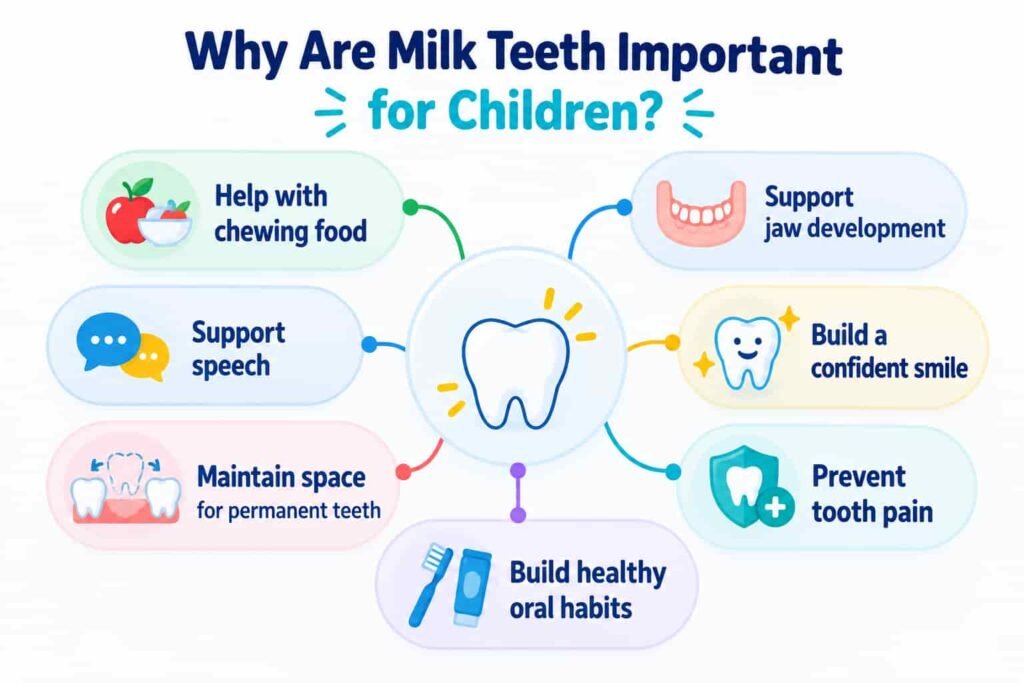
Healthy primary teeth also help children develop good eating and brushing habits. Here are seven important reasons why parents should take proper care of their child’s baby teeth.
1. Milk Teeth Help Children Chew Food Properly
One of the main functions of milk teeth is to help children bite and chew food. Healthy teeth allow children to eat different types of food, including fruits, vegetables, grains and other nutritious meals.
When a child has tooth decay or dental pain, chewing can become uncomfortable. Some children may avoid hard or crunchy foods because of dental discomfort. This can affect their normal eating habits and food choices.
Healthy baby teeth help children:
- Bite food into smaller pieces.
- Chew different types of food comfortably.
- Develop normal eating habits.
- Enjoy a balanced diet without dental discomfort.
Parents should not ignore tooth pain or visible cavities in children. A dental examination can help identify the problem and guide suitable treatment. At Dr. Sommyta’s Dental House, parents can seek guidance about maintaining their child’s oral health and addressing dental concerns.
2. Milk Teeth Support Speech Development
Milk teeth also play an important role in speech development. Children use their teeth, tongue and lips together to produce different sounds. Some sounds require the tongue to touch or move close to the front teeth.
Healthy primary teeth support clear pronunciation and normal speech patterns. If a child loses front baby teeth too early because of decay or dental injury, it may affect the production of certain sounds in some cases. However, speech development also depends on several other factors.
Parents should pay attention to their child’s speech and consult a dentist if early tooth loss or dental problems are affecting their comfort. Maintaining healthy milk teeth can support normal oral functions during childhood.
3. Milk Teeth Maintain Space for Permanent Teeth
This is one of the most important reasons to protect milk teeth. Baby teeth act as natural space holders for permanent teeth. They help maintain the space in the jaw where adult teeth will eventually develop.
When a baby tooth falls out naturally, the permanent tooth gradually moves into its position. However, if a milk tooth is lost too early because of severe decay or injury, nearby teeth may move towards the empty space.
This can reduce the space available for the permanent tooth and may lead to alignment or eruption problems. Depending on the child’s age and dental condition, a dentist may recommend a space maintainer to preserve the space until the permanent tooth is ready to emerge.
Parents should consult a dentist if their child loses a milk tooth much earlier than expected. Early examination can help determine whether any preventive treatment is needed.
4. Milk Teeth Support Healthy Jaw Development
Milk teeth help children develop normal biting and chewing functions. As children grow, their jaws also develop to accommodate new teeth. Healthy primary teeth allow children to chew comfortably and use their teeth properly.
The position and condition of baby teeth also help dentists monitor the development of the dental arches and bite. Regular dental examinations allow parents to understand whether their child’s teeth and jaws are developing as expected.
Milk teeth are not the only factor responsible for jaw development, but they play an important role in normal oral function during childhood. Parents should encourage healthy eating habits and arrange regular dental checkups.
5. Healthy Milk Teeth Support a Confident Smile
A child’s smile is an important part of their personality and confidence. Dental problems such as visible cavities, broken teeth or missing front teeth can make some children feel uncomfortable while smiling or speaking.
Healthy baby teeth help children maintain a natural smile and feel more comfortable when interacting with others. Parents can support their child’s confidence by teaching good brushing habits and addressing dental problems at an early stage.
A healthy smile during childhood also helps children understand the value of oral hygiene. At Sommyta Dental House, parents can discuss their child’s dental concerns and learn about suitable care options.
6. Healthy Milk Teeth Help Prevent Tooth Pain and Infection
Milk teeth can develop cavities just like permanent teeth. In fact, baby teeth have thinner enamel, so tooth decay can progress quickly if it is not treated.
Common signs of dental problems include:
- White, brown or black spots on teeth.
- Tooth sensitivity.
- Pain while eating.
- Swollen gums.
- Visible holes in teeth.
- Difficulty chewing.
- Persistent bad breath.
If tooth decay is ignored, it may reach deeper parts of the tooth and cause pain or infection. A dentist can examine the affected tooth and recommend suitable treatment, such as a filling, pulp treatment or another procedure depending on the condition.
Parents should never assume that a painful baby tooth does not need treatment simply because it will eventually fall out. Timely dental care can help prevent further complications.
7. Milk Teeth Help Build Healthy Oral Hygiene Habits
Good oral health habits should begin as soon as the first milk tooth appears. Children who learn to brush regularly and maintain healthy eating habits can develop a positive attitude towards dental care.
Parents play an important role in building these habits. They should help children brush properly, limit sugary snacks and encourage regular dental checkups.
Taking care of baby teeth creates a strong foundation for maintaining healthy permanent teeth in the future. Early dental visits can also help children become more comfortable with dental examinations.
What Happens If Milk Teeth Are Not Taken Care Of?
Ignoring baby teeth can lead to several dental problems. Although milk teeth are temporary, untreated dental issues can affect a child’s comfort, eating habits and oral development.
Parents should understand that cavities and infections in baby teeth need proper attention. The American Academy of Pediatric Dentistry’s parent resources provide useful guidance about children’s primary teeth and dental care.
Tooth Decay and Cavities in Children
Tooth decay is one of the most common dental problems in children. Frequent consumption of sugary foods, sweet drinks and poor brushing habits can increase the risk of cavities.
Early tooth decay may appear as white spots on the enamel. As the condition progresses, brown or black marks and visible holes may develop.
If parents notice unusual marks on their child’s teeth, they should arrange a dental examination. Early diagnosis helps the dentist decide whether preventive care or treatment is required.
Early Loss of Milk Teeth
Milk teeth usually fall out naturally when permanent teeth are ready to replace them. However, severe cavities, infections or dental injuries may cause a baby tooth to be lost earlier than expected.
Early tooth loss can affect the space available for permanent teeth. Nearby teeth may move into the empty space, which can create alignment concerns. A dentist may recommend a space maintainer when appropriate.
Parents should seek professional advice if a child loses a tooth much earlier than expected.
Toothache and Dental Infection
Untreated cavities can become deeper and may lead to severe toothache or infection. Children may experience pain while eating, disturbed sleep or swelling around the affected tooth.
Parents should seek prompt dental attention if their child develops severe pain, swelling or other signs of infection. If a child has facial swelling, fever with dental pain or difficulty swallowing, urgent medical or dental care is important.
Problems with Eating and Chewing
Children with dental pain may avoid chewing on the affected side. They may also refuse certain foods because biting or chewing causes discomfort.
Timely dental treatment can help children return to comfortable eating and normal daily activities. Parents should pay attention to changes in their child’s eating habits because these may sometimes indicate an underlying dental problem.
At What Age Do Milk Teeth Fall Out?
Most children start losing their milk teeth around five or six years of age. The lower and upper front teeth are usually among the first to fall out. Other teeth gradually become loose as permanent teeth develop.
The process continues over several years, and most children lose their primary teeth by around 12 or 13 years of age. However, the exact timing can vary from child to child.
Normal Age for Losing Baby Teeth
The following is a general guide to the age at which milk teeth usually fall out:
- 6–7 years: Lower and upper front teeth often begin to fall out.
- 7–9 years: Other front teeth may become loose.
- 9–12 years: Canines and some molars gradually fall out.
- 10–13 years: Most remaining baby teeth are replaced by permanent teeth.
These ages are approximate. Every child’s dental development is different. Parents should not compare their child’s tooth development with other children without considering individual differences.
When Should Parents Be Concerned About Early Tooth Loss?
If a child loses a baby tooth much earlier than expected, parents should consult a dentist. Early tooth loss may happen because of deep tooth decay, dental infection, accidental injury or other dental conditions.
A dentist can examine the affected area and suggest suitable treatment to protect the child’s oral health. In some cases, a space maintainer may be recommended to help preserve the space for the developing permanent tooth.
What Happens When Permanent Teeth Start Growing?
Permanent teeth develop inside the jaw and gradually move towards the gums. As a permanent tooth develops beneath a primary tooth, the roots of the baby tooth gradually dissolve. This makes the milk tooth loose and allows it to fall out naturally.
Not all permanent teeth replace baby teeth. Some permanent molars erupt behind the existing milk teeth without replacing them. Parents should encourage children not to forcefully pull out a loose tooth.
If a tooth causes pain, unusual bleeding or discomfort, a dentist should examine it.
Also read : Bleeding Gums While Brushing | Causes, Symptoms & Treatment in Indore
How to Take Care of Milk Teeth?
Good dental habits at home can protect baby teeth from cavities and other common problems. Parents play an important role because young children cannot clean their teeth properly on their own.
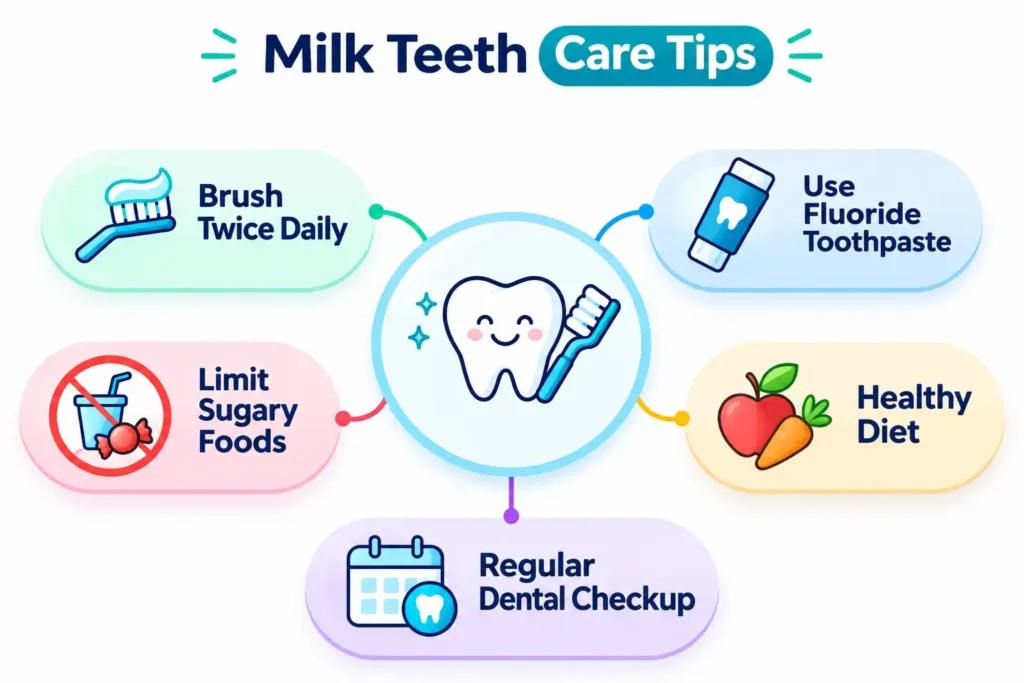
Here are some simple ways to maintain children’s oral health.
Brush Your Child’s Teeth Twice a Day
Brushing twice daily helps remove plaque and food particles from teeth. Use a soft-bristled toothbrush designed for children. Parents should help younger children brush their teeth, especially before bedtime.
Make sure to clean the front teeth, back teeth and areas near the gums. Use gentle movements and make brushing a regular part of the morning and bedtime routine.
Use Age-Appropriate Fluoride Toothpaste
Fluoride helps strengthen tooth enamel and protect teeth against cavities. Using the correct amount of fluoride toothpaste is important for young children.
General dental guidance recommends:
- Below 3 years: Use a tiny smear of fluoride toothpaste, approximately the size of a grain of rice.
- 3–6 years: Use a pea-sized amount of fluoride toothpaste.
Parents should supervise brushing and encourage children to spit out excess toothpaste instead of swallowing it. Ask your dentist about the most suitable toothpaste for your child’s age and dental needs. The AAP guide to fluoride and children explains fluoride use and children’s oral health.
Limit Sugary Foods and Drinks
Frequent exposure to sugar can increase the risk of tooth decay. Candies, chocolates, biscuits, sweetened juices and soft drinks can contribute to cavities, especially when children consume them frequently.
Parents can protect their child’s teeth by:
- Limiting sugary snacks between meals.
- Avoiding frequent sweet drinks.
- Offering water instead of sugary beverages.
- Choosing fresh fruits and healthy snacks.
- Avoiding putting a baby to sleep with a bottle containing juice or other sweetened drinks.
A balanced diet supports both general health and healthy teeth. Parents should also avoid allowing children to snack on sugary foods throughout the day.
Encourage Healthy Eating Habits
Children need a balanced diet for healthy growth and dental development. Include vegetables, fruits, whole grains, dairy products and other nutritious foods according to the child’s age and dietary needs.
Encourage regular meals instead of frequent sugary snacking. Healthy eating habits, along with proper brushing, can help reduce the risk of dental cavities.
Schedule Regular Dental Checkups
Do not wait until your child develops tooth pain before visiting a dentist. The first dental visit is recommended when the first tooth appears or no later than the child’s first birthday.
Regular dental checkups help identify cavities, monitor tooth development and provide guidance about brushing and oral hygiene. Your dentist can also recommend preventive treatments based on your child’s individual dental needs.
Parents looking for professional guidance can explore the Kids Dental Clinic in Indore to learn more about children’s dental care at Dr. Sommyta’s Dental House.
Common Milk Teeth Problems Parents Should Know
Children can experience several dental problems while their primary teeth are developing. Recognising early signs can help parents seek timely care.
Tooth Cavities in Children
Cavities develop when bacteria in the mouth produce acids that damage tooth enamel. White spots, dark marks and visible holes may indicate tooth decay.
Children with cavities may also complain of sensitivity or pain while eating. Early examination helps the dentist decide whether preventive care or treatment is required.
Tooth Sensitivity
Some children may feel discomfort when eating or drinking something cold, hot or sweet. Tooth sensitivity can have different causes, including cavities, enamel damage or other dental conditions.
If the discomfort continues, parents should arrange a dental checkup rather than ignoring it.
Milk Teeth Pain
Toothache in children can happen because of cavities, infection, food trapped between teeth or dental injuries. Children may show signs such as crying while eating, avoiding certain foods or touching the painful area.
A dentist should examine the tooth to identify the cause and recommend appropriate treatment. Parents should not delay care if the child has persistent pain.
Broken or Damaged Baby Teeth
Children are active and may sometimes fall or experience injuries while playing. A broken or chipped baby tooth should be checked by a dentist, even if the child does not complain of pain.
Timely examination can help identify damage and reduce the risk of further complications.
When Should You Take Your Child to a Dentist?
Parents should arrange a dental checkup if they notice unusual changes in their child’s teeth or gums. Some common warning signs include:
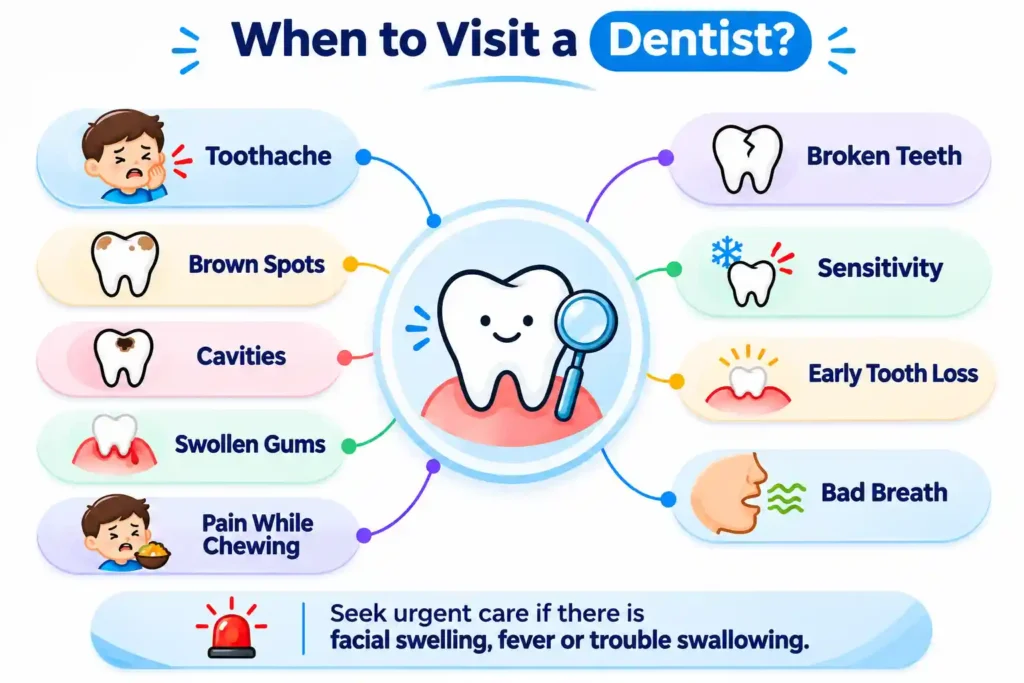
- Toothache or continuous discomfort.
- Black or brown spots on baby teeth.
- Visible cavities or holes.
- Swollen or bleeding gums.
- Pain while chewing food.
- Broken or chipped teeth.
- Unusual sensitivity.
- Early loss of milk teeth.
- Persistent bad breath.
If your child has facial swelling, fever with dental pain or difficulty swallowing, seek urgent medical or dental care. Early diagnosis can help prevent minor dental problems from becoming more serious.
Also read : Pediatric Dentist in Indore | How to Choose the Right Dentist for Your Child
Why Choose Dr. Sommyta’s Dental House for Children’s Dental Care in Indore?
Choosing the right dental clinic is an important step in maintaining your child’s oral health. Parents should look for a clinic that understands children’s dental needs and explains treatment options clearly.
At Dr. Sommyta’s Dental House, we understand that children need special attention and a comfortable approach during dental visits. Our focus is on helping parents understand their child’s dental needs and supporting healthy oral habits from an early age.
Child-Friendly Dental Care
Children may feel nervous during their first dental visit. A comfortable and supportive approach can help them feel more relaxed.
At Sommyta Dental House, the kids dentistry process focuses on understanding the child’s concerns and making dental visits easier for children.
Regular Dental Checkups and Early Detection
Regular dental examinations help identify cavities, tooth sensitivity and other dental concerns at an early stage. Early attention allows parents to understand their child’s dental condition and discuss suitable treatment options with the dentist.
Gentle Dental Treatment Approach
Every child has different dental needs. The clinic’s approach includes understanding the child’s concerns, examining the teeth and explaining suitable treatment options to parents.
The aim is to help children develop healthy dental habits and receive appropriate care according to their individual needs.
Guidance for Parents
Parents often have questions about brushing, fluoride toothpaste, food habits and milk tooth development. Proper dental guidance can help families build a simple and effective oral hygiene routine at home.
You can visit Dr. Sommyta’s Dental House to learn more about the clinic and its dental services.
Frequently Asked Questions About Milk Teeth
1. Why Are Milk Teeth Important If They Fall Out?
Milk teeth help children chew food, speak clearly and maintain space for permanent teeth. They also support normal oral development. Although they are temporary, they need proper cleaning and dental care.
2. How Many Milk Teeth Does a Child Have?
Children normally develop 20 milk teeth. These include eight incisors, four canines and eight molars. Most children have a complete set by around three years of age.
3. At What Age Do Milk Teeth Start Falling Out?
Most children start losing their milk teeth around five or six years of age. The process usually continues until approximately 12 or 13 years, although the timing varies.
4. Can Milk Teeth Get Cavities?
Yes. Milk teeth can develop cavities due to plaque, frequent sugar consumption and poor oral hygiene. Baby teeth have thinner enamel, so decay can progress quickly.
5. Should Cavities in Milk Teeth Be Treated?
Yes. Cavities in baby teeth should not be ignored. Untreated decay can cause pain, infection and difficulty eating. A dentist can recommend suitable treatment based on the child’s age and the condition of the tooth.
6. What Happens If Milk Teeth Fall Out Too Early?
Early loss of milk teeth can affect the space available for permanent teeth. Nearby teeth may shift into the empty space, which can create alignment concerns. A dentist can assess whether space maintenance is needed.
7. How Can Parents Protect Their Child’s Milk Teeth?
Parents should help children brush twice daily with age-appropriate fluoride toothpaste, limit sugary foods and drinks, encourage healthy eating and arrange regular dental checkups.
8. When Should a Child First Visit a Dentist?
A child should visit a dentist when the first tooth appears or no later than the child’s first birthday. Early dental visits help parents learn proper oral hygiene and allow the dentist to monitor tooth development.
9. Can a Dentist Save a Decayed Milk Tooth?
In many cases, a decayed milk tooth can be treated. Depending on the depth of decay and the child’s dental condition, the dentist may recommend a filling, pulp treatment or another suitable procedure. Early examination helps determine the best option.
10. Do Children Need Dental Checkups Even If They Have No Pain?
Yes. Dental problems can develop without causing pain in the early stages. Regular checkups help identify early cavities, monitor tooth eruption and guide parents about preventive care.
Conclusion: Healthy Milk Teeth Build Healthy Smiles
Milk teeth are an important part of a child’s growth. They support chewing, speech development, normal oral functions and the proper positioning of permanent teeth. Parents should never ignore baby teeth simply because they will eventually fall out.
Regular brushing, healthy eating habits and timely dental checkups can help prevent cavities and protect a child’s smile. At Dr. Sommyta’s Dental House, we encourage parents to make children’s dental care a priority from an early age.
If you are concerned about your child’s milk teeth, tooth pain or dental development, schedule a dental checkup and get the right guidance. Explore our dental services in Indore to learn more.
Contact Dr. Sommyta’s Dental House
Clinic: Dr. Sommyta’s Dental House
Phone: +91 94258 16183
Address: 29A, Ashish Nagar Rd, Ashish Nagar, Indore, Madhya Pradesh 452016
Website: https://sommytadentalhouse.com/
Give your child the right start towards healthy teeth and a confident smile.