
Have you ever felt a sudden, sharp pain when drinking cold water, eating ice cream, having hot tea, or brushing your teeth? If this happens often, you may have sensitive teeth, also known as tooth sensitivity or dentin hypersensitivity.
Tooth sensitivity is a common dental concern, but it should not always be ignored. In some cases, sensitivity can happen because of simple enamel wear or exposed tooth roots. In other cases, it may be linked to cavities, gum recession, a cracked tooth, worn fillings, or gum disease. The right treatment depends on what is causing the sensitivity.
At Sommyta Dental House in Indore, patients with sensitive teeth can get their teeth and gums examined to understand the actual cause of their discomfort. The clinic provides dental checkups and X-rays along with treatments such as teeth cleaning and polishing, root canal treatment, crowns and bridges, and other dental care services.
In this guide, we will explain the common sensitive teeth causes, what tooth sensitivity feels like, why teeth become sensitive to hot and cold foods, available treatment options, home care tips, and ways to prevent sensitivity from getting worse.
What Are Sensitive Teeth?
Sensitive teeth are teeth that react with a short, sharp sensation when they come in contact with certain triggers. These triggers may include cold water, hot drinks, sweet foods, acidic foods, cold air, brushing, or flossing.
The medical term often used for this condition is dentin hypersensitivity.
To understand why sensitivity happens, it helps to know a little about the structure of a tooth.
The outer part of the visible tooth is protected by enamel. Under the enamel is a layer called dentin. Dentin contains very small channels called tubules. When the protective enamel becomes thin or when the tooth root becomes exposed because of gum recession, these tubules can become exposed to the outside environment.
When hot, cold, sweet, acidic, or other stimuli reach these exposed areas, they can trigger a painful sensation.
This is why a person may feel a sudden pain after taking a sip of cold water or eating something sweet.
A healthy tooth should not normally cause repeated sharp pain during everyday eating and drinking. If sensitivity is becoming frequent, it is worth finding out why it is happening instead of simply avoiding cold or hot foods.
What Does Tooth Sensitivity Feel Like?
Tooth sensitivity can feel different from person to person, but the most common symptom is a quick, sharp pain.
You may notice sensitivity when:
- Drinking cold water
- Eating ice cream
- Drinking hot tea or coffee
- Eating sweets
- Eating sour or acidic foods
- Brushing your teeth
- Flossing around a particular tooth
- Breathing cold air
- Touching an exposed part of a tooth
For many people, the pain stops shortly after the trigger is removed.
However, if the pain continues for a long time, happens without any obvious trigger, becomes severe, or is associated with swelling or pain while chewing, it may indicate a dental problem that needs professional attention.
Also read : Painless Dental Treatment Under Laughing Gas in Indore
What Causes Sensitive Teeth?
There are many possible sensitive teeth causes. The important thing is to understand that sensitivity is often a symptom rather than a disease on its own.
Here are some of the most common reasons teeth become sensitive.
1. Worn Tooth Enamel
Enamel is the hard outer covering of the tooth. It protects the softer structures underneath it.
Although enamel is extremely strong, it can become thinner or worn over time. Frequent exposure to acidic foods and drinks, aggressive brushing, and other forms of tooth wear can contribute to enamel loss.
When enamel becomes thinner, the dentin underneath may become more exposed. Since dentin contains microscopic tubules that can transmit sensations toward the inner part of the tooth, exposure can make the tooth more sensitive.
For example, someone who regularly drinks acidic beverages several times a day may gradually notice that cold drinks start causing discomfort.
This does not mean that one glass of an acidic drink will suddenly damage your teeth. The concern is repeated exposure over time.
Protecting your enamel is therefore an important part of preventing tooth sensitivity.
2. Gum Recession
Your gums cover and protect the roots of your teeth. When gums recede, part of the tooth root can become exposed.
The root does not have the same thick enamel protection as the crown of the tooth. As a result, exposed roots can be much more sensitive to cold, hot, sweet, and even touch.
Gum recession can happen for different reasons. Aggressive brushing, gum disease, and other factors can contribute to it.
If you notice that your teeth look longer than before or you can see a small area near the gum line that was not visible earlier, talk to a dentist.
Treating the cause of gum recession is more important than simply trying to cover up the sensitivity.
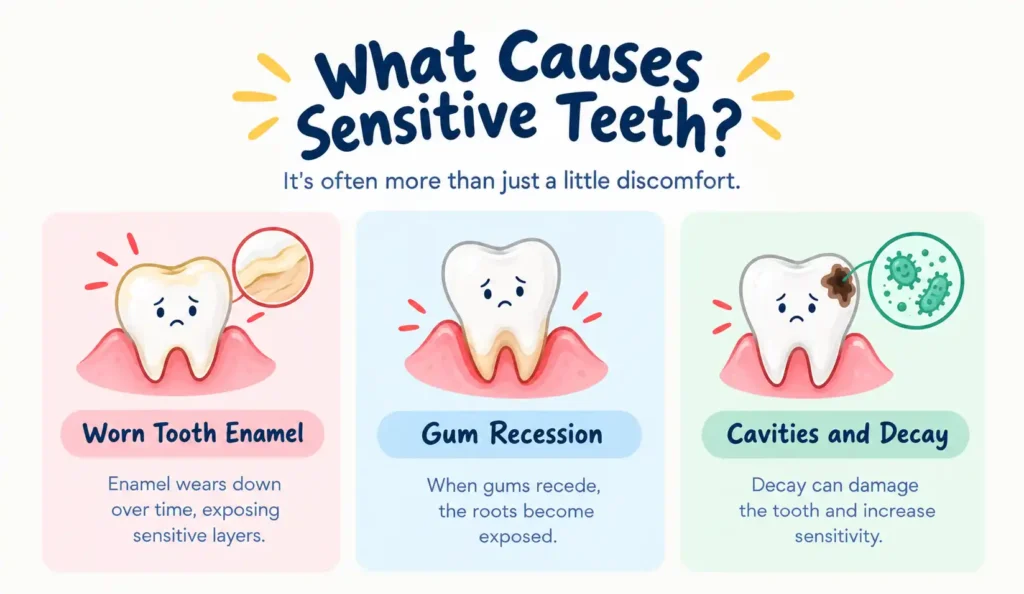
3. Cavities and Tooth Decay
A cavity can also cause tooth sensitivity.
Tooth decay starts by damaging the outer tooth structure. As the decay progresses deeper, it can come closer to the dentin and eventually the pulp, where the nerves and blood vessels are located.
A person with a cavity may notice sensitivity when eating:
- Sweets
- Cold foods
- Hot foods
- Certain acidic foods
Sometimes the sensitivity is the first sign that something is wrong.
If one particular tooth suddenly becomes sensitive, especially if it also has a visible dark spot, hole, food getting stuck, or pain while chewing, it should be examined.
A toothpaste for sensitive teeth may reduce discomfort, but it cannot repair a cavity. The underlying decay needs appropriate dental treatment.
4. Cracked or Fractured Teeth
A cracked tooth can cause sensitivity, especially when you bite or chew.
Some cracks are easy to see, but others may be very small and difficult to identify without a dental examination.
A cracked tooth may cause:
- Pain when chewing
- Pain when releasing your bite
- Sensitivity to cold
- Sensitivity to sweets
- Occasional sharp pain
If sensitivity is limited to one tooth and seems to happen during chewing, do not assume it is simple tooth sensitivity. A dentist should check the tooth for cracks or other damage.
5. Worn or Damaged Dental Fillings
Dental fillings are used to restore teeth affected by decay or damage. Over time, a filling can wear down, become damaged, or develop problems around its edges.
If sensitivity develops around a tooth that already has a filling, the dentist may need to check the filling and the tooth underneath it.
The sensitivity could be related to the filling, new decay, a crack, or another dental issue.
This is why the treatment should be based on an examination rather than simply changing toothpaste.
6. Gum Disease
Gum disease can affect the tissues around the teeth. In some cases, gum problems can lead to gum recession and exposed tooth roots, which may increase sensitivity.
Signs of gum problems can include:
- Bleeding while brushing
- Red or swollen gums
- Bad breath
- Gum tenderness
- Gum recession
- Tooth sensitivity
- Loose teeth in advanced cases
Bleeding gums should not always be treated as normal. If sensitivity occurs together with bleeding or swollen gums, a dental checkup can help identify the problem.
7. Brushing Too Hard
Many people believe that brushing harder means cleaning their teeth better. That is not true.
Excessive pressure can irritate the gums and may contribute to tooth surface wear over time.
A better approach is to use a soft-bristled toothbrush and gentle movements.
You do not need to scrub your teeth aggressively to remove plaque. Consistent brushing with the correct technique is more important than force.
8. Acidic Foods and Drinks
Acidic foods and drinks can contribute to enamel erosion when teeth are exposed to them frequently.
Common examples include:
- Soft drinks
- Energy drinks
- Citrus-based drinks
- Lemon drinks
- Sour candies
- Other acidic beverages
The problem is often related to frequency. Repeated acid exposure gives the teeth less time to recover between exposures.
If you regularly consume acidic drinks, consider reducing how often you have them. Drinking water afterward can also help clear the mouth.
9. Teeth Grinding and Clenching
Some people grind or clench their teeth during sleep without knowing it.
Over time, repeated pressure can contribute to tooth wear and may increase the risk of sensitivity.
Possible signs include:
- Worn or flattened teeth
- Jaw discomfort
- Morning headaches
- Tooth sensitivity
- Tenderness while chewing
If you suspect that you grind your teeth, discuss it with your dentist. A dental examination can help determine whether tooth wear is present and whether further protection is needed.
Also read : Bleeding Gums While Brushing | Causes, Symptoms & Treatment in Indore
Why Are My Teeth Sensitive to Cold?
Cold sensitivity is one of the most common forms of tooth sensitivity.
You may feel a sharp sensation after drinking:
- Cold water
- Cold juice
- Soft drinks
- Iced beverages
You may also feel it when eating ice cream or other cold foods.
Cold sensitivity can happen when dentin becomes exposed because of enamel wear, gum recession, cavities, cracks, or other dental conditions.
For example, if the gum has receded around one tooth, the exposed root may react strongly when cold water touches it.
Occasional sensitivity does not always mean there is a serious problem. However, sensitivity that is new, increasing, or limited to one particular tooth deserves attention.
Why Are My Teeth Sensitive to Hot Food and Drinks?
Some people experience tooth sensitivity when drinking hot tea, coffee, or eating hot foods.
Hot sensitivity can have different causes. It may occur because of exposed dentin, decay, cracks, or problems affecting the deeper part of the tooth.
One important factor is how long the pain lasts.
If you take a sip of hot tea and feel a brief sharp sensation that disappears quickly, it may be related to sensitivity.
But if the pain continues after the hot drink is gone, occurs without any trigger, or becomes severe, the problem may be deeper.
In such cases, a dental examination is important because simply avoiding hot foods may not address the actual cause.
Can Sensitive Teeth Be a Sign of a Cavity?
Yes, tooth sensitivity can be associated with a cavity.
However, not every sensitive tooth has a cavity.
Sensitivity may also happen because of:
- Worn enamel
- Gum recession
- Exposed tooth roots
- Cracked teeth
- Worn fillings
- Gum disease
- Other dental conditions
This is why it is not a good idea to diagnose the cause yourself based only on the type of pain.
If a particular tooth becomes sensitive to sweets or cold foods repeatedly, a dentist can examine it for decay and other possible causes.
Sensitive Teeth Treatment: How Is Tooth Sensitivity Treated?
The right sensitive teeth treatment depends on the cause.
There is no single treatment that works for every person because sensitivity caused by enamel wear is different from sensitivity caused by a cavity or an infected tooth.
A dentist may recommend one or more treatment options after examining the teeth and gums.
Desensitizing Toothpaste
Desensitizing toothpaste is one of the common first steps for managing dentin sensitivity.
These toothpastes contain ingredients designed to reduce the transmission of sensation from the tooth surface toward the nerve.
They generally need regular use rather than a single application.
If you have mild sensitivity and there is no underlying dental problem, your dentist may recommend an appropriate desensitizing toothpaste.
However, sensitive toothpaste is not a replacement for dental treatment when the sensitivity is caused by decay, a cracked tooth, gum disease, or another structural problem.
Fluoride Treatment
Fluoride helps strengthen tooth enamel and is widely used for cavity prevention.
In some cases, a dentist may recommend professional fluoride treatment for a patient experiencing tooth sensitivity.
The choice of fluoride treatment depends on the patient’s oral health, risk factors, and the cause of sensitivity.
It is especially important to remember that fluoride treatment should be part of an overall oral care plan rather than viewed as a universal solution for every type of sensitivity.
Dental Filling or Bonding
If sensitivity is caused by tooth decay or an exposed area of the tooth, a filling or bonding procedure may be considered.
The goal is to restore the damaged area and provide protection to the underlying tooth structure.
For example, if a cavity has exposed dentin, treating the cavity can remove the source of sensitivity rather than simply masking the symptoms.
Treatment for Gum Recession
If exposed tooth roots are causing sensitivity, the dentist will first look at the condition of the gums and determine why recession is occurring.
Treatment may involve improving brushing technique, managing gum disease, professional cleaning, or other periodontal care.
In selected cases where significant gum tissue has been lost, a gum graft may be considered.
The right option depends on the amount of recession and the overall health of the gums.
Dental Crown
A crown may be recommended when a tooth has significant structural damage and needs additional protection.
A crown is not automatically required for every sensitive tooth.
The dentist needs to determine whether the tooth has enough healthy structure and whether a crown is appropriate for the particular situation.
Root Canal Treatment
Root canal treatment is sometimes needed when the inner pulp of the tooth becomes seriously affected.
This is an important distinction: having sensitive teeth does not automatically mean that you need a root canal.
If sensitivity is severe, persistent, spontaneous, or associated with deeper tooth damage or infection, the dentist may investigate whether the pulp is involved.
If root canal treatment is required, the goal is to remove the affected pulp, clean the inside of the tooth, and preserve the remaining tooth structure.
Sommyta Dental House in Indore provides root canal treatment as part of its dental services, but the need for RCT should always be determined after examining the individual tooth.
Can Sensitive Teeth Be Treated at Home
Mild tooth sensitivity can sometimes be managed with better daily oral care, but home care does not fix every cause of sensitivity.
For example, brushing gently may help if excessive brushing is contributing to gum irritation. A desensitizing toothpaste may help manage dentin sensitivity. Reducing frequent acidic drinks may also help protect enamel.
However, home care cannot repair a deep cavity, close a cracked tooth, replace a damaged filling, or treat an infected pulp.
This is why it is useful to think of home care as supportive care, not a substitute for diagnosis.
If sensitivity continues despite improving your oral hygiene, schedule a dental examination.
What Is the Best Toothpaste for Sensitive Teeth?
There is no single toothpaste that is best for every person.
If you have dentin sensitivity, a toothpaste specifically formulated for sensitive teeth may help reduce discomfort when used regularly.
When choosing toothpaste, consider:
- Fluoride content for cavity protection
- Desensitizing ingredients when appropriate
- Your overall dental condition
- Advice from your dentist if you have an underlying dental problem
If you have been using sensitive toothpaste for some time and the pain is not improving, do not simply keep switching between different products.
Persistent sensitivity may be a sign that the underlying cause needs to be treated.
10 Ways to Prevent Sensitive Teeth
Preventing tooth sensitivity is closely connected with protecting your enamel, gums, and overall oral health
.
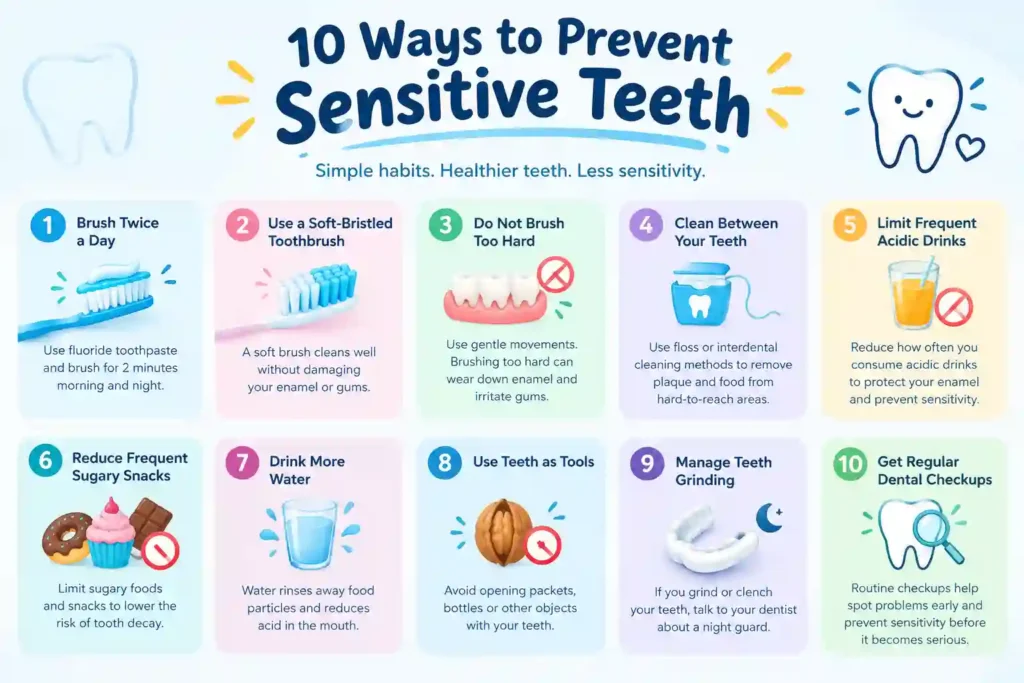
1. Brush Twice a Day
Brush your teeth twice a day using fluoride toothpaste.
Regular brushing helps remove plaque and supports the health of your teeth and gums.
2. Use a Soft-Bristled Toothbrush
A soft toothbrush can clean the teeth without the need for excessive pressure.
Replace your toothbrush when the bristles become worn or damaged.
3. Do Not Brush Too Hard
Use gentle movements rather than aggressive scrubbing.
If you notice that your toothbrush bristles become flattened quickly, you may be applying too much pressure.
4. Clean Between Your Teeth
Brushing cannot clean every surface between the teeth.
Use floss or another suitable interdental cleaning method to remove plaque and food from these areas.
5. Limit Frequent Acidic Drinks
You do not necessarily need to avoid every acidic food forever.
The bigger concern is frequent exposure.
Try to reduce how often you consume acidic beverages and drink water afterward.
6. Reduce Frequent Sugary Snacks
Frequent sugar exposure can increase the risk of tooth decay.
Instead of repeatedly snacking on sugary foods throughout the day, focus on balanced meals and good oral hygiene.
7. Drink More Water
Water can help rinse away food particles and reduce the effect of acids in the mouth.
It is also a simple choice when you want to replace sugary or acidic drinks.
8. Avoid Using Teeth as Tools
Do not use your teeth to open packets, bottles, or other objects.
This can put unnecessary stress on the teeth and increase the risk of chips or cracks.
9. Manage Teeth Grinding
If you grind or clench your teeth, talk to your dentist.
Managing excessive tooth grinding can help protect the tooth structure from further wear.
10. Get Regular Dental Checkups
Regular dental examinations can help identify cavities, gum problems, enamel wear, and other dental concerns before they become more complicated.
Also read : Conscious Sedation for Kids in Indore | Comfortable Pediatric Dental Care
When Should You See a Dentist for Sensitive Teeth?
Not every episode of sensitivity means you need urgent dental treatment.
However, you should consider seeing a dentist when the sensitivity is:
- Frequent
- Getting worse
- Limited to one particular tooth
- Associated with toothache
- Present while chewing
- Associated with swelling
- Associated with bleeding or swollen gums
- Caused by a broken or cracked tooth
- Continuing even after the hot or cold trigger is removed
- Not improving with appropriate home care
One of the most important warning signs is persistent pain.
Normal sensitivity often produces a brief response to a trigger. Pain that continues, occurs without a trigger, or becomes severe may point toward another dental condition.
How Is Tooth Sensitivity Diagnosed?
Finding the cause is the first important step in treating sensitive teeth.
During a dental examination, the dentist may ask questions such as:
- When did the sensitivity begin?
- Which tooth is affected?
- Does cold trigger the pain?
- Does hot food cause discomfort?
- Does eating sweets trigger sensitivity?
- Does the pain occur while chewing?
- How long does the pain last?
- Have you recently had a filling, cleaning, or whitening treatment?
The dentist may then examine the teeth and gums for:
- Cavities
- Gum recession
- Enamel wear
- Cracks
- Damaged fillings
- Gum disease
- Exposed tooth roots
In some cases, dental X-rays may be recommended to look for problems that cannot be identified during a simple visual examination.
At Sommyta Dental House, Indore, dental checkups and X-rays are available as part of the clinic’s diagnostic and dental care services. The aim is to understand the patient’s condition before deciding what treatment is appropriate.
Sensitive Teeth vs Toothache: What Is the Difference?
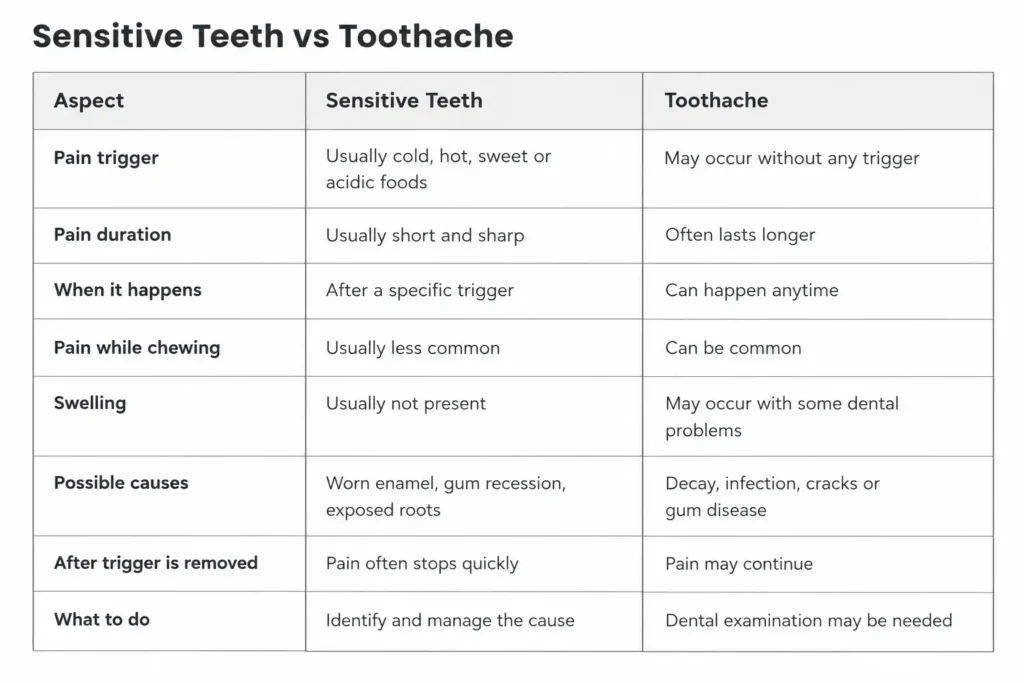
Sensitive teeth and toothache can sometimes feel similar, but they are not always the same thing.
Tooth sensitivity often:
- Happens after a specific trigger
- Causes a short, sharp sensation
- Happens with cold, hot, sweet, or acidic foods
- Stops relatively quickly after the trigger is removed
A toothache may:
- Happen without eating or drinking
- Last for a longer period
- Become stronger over time
- Hurt while chewing
- Be associated with swelling
- Be linked to decay, infection, a crack, or gum disease
These differences are not enough to diagnose a dental problem on their own.
If you are unsure whether you have simple sensitivity or a toothache, a dental examination can provide a clearer answer.
Can Teeth Whitening Cause Sensitivity?
Yes, some people experience temporary tooth sensitivity after teeth whitening.
Whitening products can affect the tooth structure temporarily, allowing sensitivity to occur in some patients.
This does not mean whitening is unsafe for everyone. However, people who already have sensitive teeth, cavities, gum problems, or damaged teeth should discuss whitening with a dentist before starting treatment.
It is also important not to overuse whitening products.
If you are already experiencing significant tooth sensitivity, the first step should be understanding why your teeth are sensitive rather than immediately trying another whitening product.
Sommyta Dental House provides professional teeth whitening and bleaching as part of its dental services, allowing the patient’s dental condition to be considered before cosmetic treatment.
What Foods Should You Avoid With Sensitive Teeth?
There is no universal list of foods that every person with sensitive teeth must completely avoid.
Instead, pay attention to your individual triggers.
Common foods and drinks that may cause discomfort include:
- Ice cream
- Very cold drinks
- Hot tea or coffee
- Soft drinks
- Sour candies
- Citrus drinks
- Very sweet foods
- Highly acidic foods and drinks
If a particular food repeatedly causes pain, reduce it temporarily while you address the underlying sensitivity.
The long-term goal is not simply to avoid every food that triggers pain. The goal is to understand why the teeth are sensitive and treat the underlying problem when necessary.
Can Sensitive Teeth Go Away on Their Own?
Sometimes mild sensitivity may improve after changes in oral hygiene or when the triggering habit is reduced.
For example, if you were brushing aggressively, changing to a soft-bristled toothbrush and using gentler pressure may help reduce irritation.
But not every type of sensitivity will disappear on its own.
If the cause is:
- Tooth decay
- A cracked tooth
- Gum disease
- Significant gum recession
- A damaged filling
- A deeper infection
professional dental treatment may be required.
Ignoring recurring sensitivity can also make it harder to identify the original cause.
Frequently Asked Question
Why are my teeth suddenly sensitive?
Sudden sensitivity can have several causes, including a cavity, cracked tooth, gum recession, enamel wear, exposed tooth roots, or a damaged filling. If the sensitivity is new and especially if it affects only one tooth, it is better to have the tooth examined.
Why do my teeth hurt when I drink cold water?
Cold water can trigger pain when dentin or a tooth root becomes exposed. Enamel wear, gum recession, cavities, cracks, and other dental conditions can contribute to cold sensitivity.
Can sensitive teeth mean I have a cavity?
Yes, a cavity can cause sensitivity to cold, hot, and sweet foods. However, sensitivity can also occur for several other reasons, so an examination is needed to identify the actual cause.
Is sensitive toothpaste enough to treat sensitive teeth?
Sensitive toothpaste can help reduce dentin sensitivity in many cases, but it does not repair cavities, cracks, damaged fillings, or infections. If the sensitivity continues, a dentist should identify the underlying cause.
Can sensitive teeth be cured permanently?
The outcome depends on the cause. When the underlying problem is identified and treated, sensitivity can often be reduced or managed effectively. The treatment may be simple in some cases and may require restorative or other dental care in others.
Why do my teeth hurt when I eat sweets?
Sweet foods can trigger pain when dentin is exposed or when tooth decay is present. If the same tooth repeatedly hurts when you eat sweets, it is worth getting it checked.
Can brushing too hard cause sensitive teeth?
Aggressive brushing can contribute to gum irritation and tooth surface wear. Using a soft-bristled toothbrush and gentle brushing technique can help protect your gums and teeth.
Are sensitive teeth a serious problem?
Sensitivity can be mild, but it can sometimes be a symptom of an underlying dental problem. Persistent, severe, or unusual sensitivity should not be ignored.
When should I see a dentist for sensitive teeth?
See a dentist if sensitivity is frequent, getting worse, limited to one tooth, lasts longer than expected, or occurs with swelling, bleeding gums, toothache, broken teeth, or pain while chewing.
Can tooth sensitivity be prevented?
You can reduce the risk by protecting your enamel and gums. Brush twice a day with fluoride toothpaste, use a soft toothbrush, clean between your teeth, limit frequent acidic and sugary foods, avoid aggressive brushing, and maintain regular dental checkups.
Get Your Sensitive Teeth Checked in Indore
Sensitive teeth may seem like a small problem, especially when the pain lasts only a few seconds. But repeated sensitivity can sometimes be the first sign of a dental issue that needs attention.
The cause may be simple enamel wear or exposed dentin. It may also be related to gum recession, cavities, a cracked tooth, worn fillings, gum disease, or a deeper problem inside the tooth.
That is why the best approach is not to simply avoid cold water or stop eating ice cream. The more useful step is to understand why your teeth are sensitive.
At Sommyta Dental House, Indore, patients can undergo dental checkups and X-rays when required, followed by a treatment plan based on their individual dental condition. The clinic offers a range of dental services, including teeth cleaning and polishing, root canal treatment, crowns and bridges, dental implants, orthodontics, teeth whitening, veneers, and kids dentistry.
If you are experiencing repeated tooth sensitivity, especially in one particular tooth, consider getting it examined instead of ignoring the symptoms.
Healthy teeth should allow you to eat and drink comfortably. Finding the cause of sensitivity early can help you protect your teeth and maintain better oral health in the long term.
Key Takeaway
Sensitive teeth are usually a symptom of an underlying change in the tooth or surrounding tissues. Common causes include worn enamel, exposed tooth roots, gum recession, cavities, cracked teeth, worn fillings, and gum problems.
Treatment depends on the cause. Some people may benefit from desensitizing toothpaste or fluoride care, while others may need a filling, bonding, gum treatment, crown, or root canal treatment.
Good daily oral hygiene also plays an important role. Brush gently with fluoride toothpaste, use a soft-bristled toothbrush, clean between your teeth, limit frequent acidic and sugary foods, and maintain regular dental checkups.
Most importantly, do not assume that every sensitive tooth needs the same treatment. A proper dental examination can help identify the cause and guide the right treatment for your individual condition.