
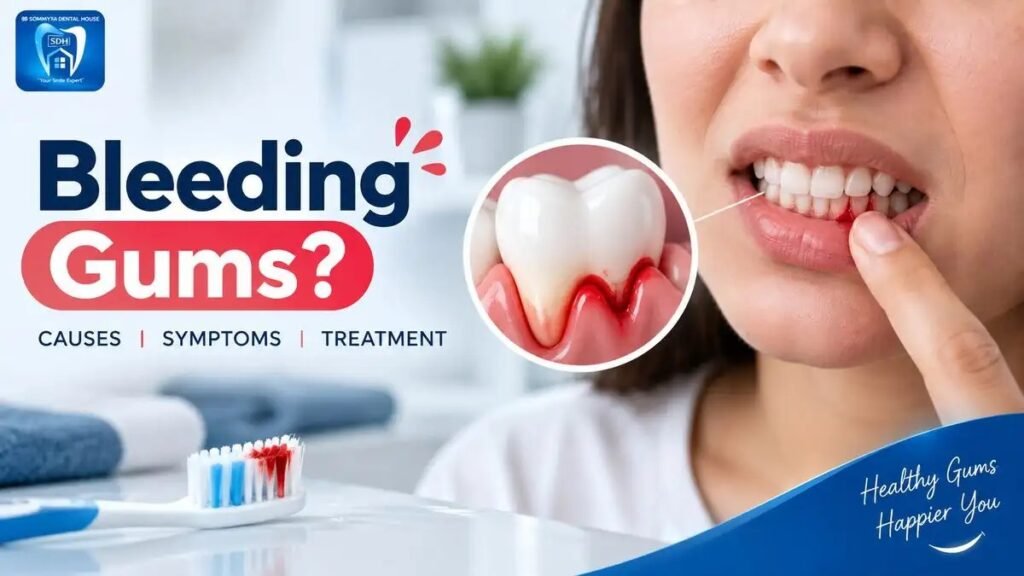
Brushing your teeth is supposed to be a simple, everyday habit not something that leaves pink or red on your toothbrush. Yet a lot of people spit out blood while brushing and just shrug it off, thinking it will go away on its own. Sometimes it does. Sometimes it doesn’t, and it’s actually your gums trying to tell you something.
Occasional, mild bleeding can happen if you brushed a little too hard, or if you just started flossing after months of not doing it. That’s usually nothing to panic about. But when your gums bleed almost every time you brush, or the bleeding keeps coming back week after week, it’s often connected to gum inflammation or early gum disease that needs attention rather than time.
If you live in Indore and this has been happening to you for a while, this guide walks you through why it happens, what symptoms to watch for, and when it’s time to actually see a dentist instead of waiting it out. Clinics such as Sommyta Dental House in Indore see this complaint fairly often, and in most cases, it’s very treatable once it’s caught early.
Quick Answer
Why do gums bleed while brushing?
The most common reason is plaque buildup along the gumline, which irritates the gum tissue and causes inflammation known as gingivitis. Brushing too hard, using a hard-bristled brush, vitamin deficiencies, hormonal changes, and smoking can also cause bleeding gums. If bleeding continues for more than a week despite gentle brushing, it’s advisable to get a dental checkup, since untreated gum inflammation can progress to periodontitis, a more serious form of gum disease.
Why Do Gums Bleed While Brushing?
There isn’t just one reason gums start bleeding it’s usually a combination of how you’re brushing and what’s happening under the gumline. Here are the most common causes dentists come across.
Plaque and Tartar Buildup
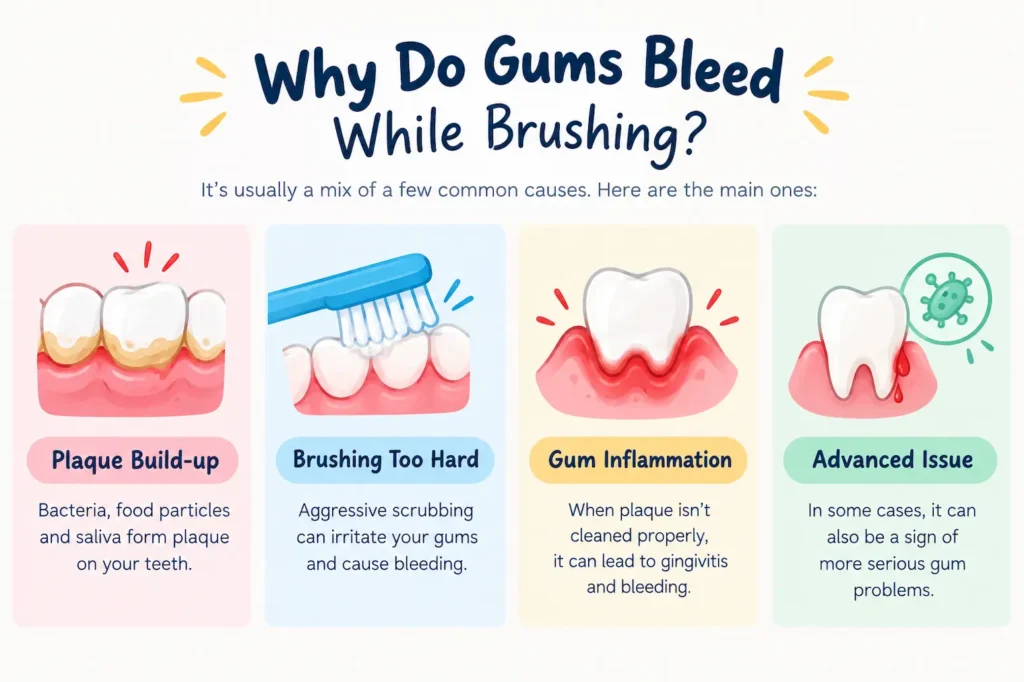
Every day, a thin, sticky film called plaque forms on your teeth. It’s made up of bacteria, food particles, and saliva. If you brush and floss well, most of it comes off. But if plaque is left sitting near the gumline for too long, it hardens into tartar (also called calculus), which a toothbrush simply cannot remove.
This buildup irritates the gum tissue right where it meets the tooth. The gums become inflamed, more sensitive, and start to bleed the moment you brush over them even gently. This is, by far, the single biggest reason people experience bleeding gums.
Brushing Too Hard
Ironically, brushing harder doesn’t clean your teeth better it just damages your gums. A hard-bristled toothbrush combined with aggressive scrubbing can wear down the gum tissue, making it thinner and more prone to bleeding. Over time, this can also contribute to gum recession, which is a separate problem on its own.
Gum Infection and Inflammation
When plaque isn’t cleaned properly for an extended period, the gum tissue reacts by becoming red, puffy, and tender. This is called gingivitis the earliest and mildest form of gum disease. At this stage, bleeding is one of the clearest warning signs, and the good news is that gingivitis is fully reversible with proper cleaning and better home care.
Common Symptoms That May Occur With Bleeding Gums
Bleeding rarely shows up completely on its own. It’s usually accompanied by a few other signs that, together, give a clearer picture of what’s going on.
Red or Swollen Gums
Healthy gums are usually a pale pink and firm to the touch. When gums turn red or look puffy along the edges, it’s a sign of inflammation.
Tender or Painful Gums
Some people notice mild soreness while eating or brushing, especially around the same spots that bleed.
Persistent Bad Breath
Bacteria trapped under the gumline and in plaque produce a smell that doesn’t go away with mouthwash or mints it keeps returning because the source hasn’t been treated.
Receding Gums
Over time, inflamed or infected gums can start pulling away from the tooth surface, making teeth look slightly longer than before.
Loose Teeth or Changes in Tooth Position
This is usually a later-stage symptom and suggests the bone and tissue supporting the teeth have already been affected. It’s a strong signal that professional treatment shouldn’t be delayed further.
If you’re also dealing with sharp discomfort when eating something cold or sweet, it’s worth reading our guide on sensitive teeth treatment near Bengali Square, since gum recession and sensitivity often show up together.
Can Bleeding Gums Be a Sign of Gum Disease?
This is the question most people are actually trying to answer when they search for bleeding gums online and the honest answer is: sometimes, yes.
Gingivitis – The Early Stage of Gum Disease
Gingivitis happens when plaque along the gumline causes inflammation. It’s extremely common, and the encouraging part is that it’s completely reversible. With consistent brushing, flossing, and a professional cleaning to remove buildup a toothbrush can’t reach, gums usually return to normal within a couple of weeks.
The mistake most people make is ignoring it because it “doesn’t hurt.” Gingivitis on its own is rarely painful, which is exactly why it tends to go unnoticed until it progresses further.
Periodontitis – Advanced Gum Disease
If gingivitis isn’t treated, the inflammation can spread deeper and start affecting the structures that actually hold your teeth in place the ligaments and the bone underneath. This stage is called periodontitis.
Unlike gingivitis, periodontitis can cause permanent damage: gum recession, bone loss around the teeth, and in more advanced cases, loose teeth that may eventually need extraction. According to the National Institute of Dental and Craniofacial Research (NIDCR), periodontal disease is largely preventable through good oral hygiene and regular dental visits, but it does require professional treatment once it sets in it won’t resolve with brushing alone.
This is really the key difference: gingivitis can often be managed and reversed at home with better habits, while periodontitis needs a dentist’s involvement.
Other Possible Causes of Bleeding Gums
Not every case of bleeding gums is about plaque. A few other factors can play a role, and it’s worth being aware of them, even though a dentist is best placed to confirm which one applies to your specific situation.
Vitamin Deficiency and Nutritional Factors
Low levels of vitamin C or vitamin K can affect how gum tissue heals and how blood clots, which may make gums more prone to bleeding.
Hormonal Changes
Pregnancy, puberty, and menstrual cycle changes can make gums more sensitive to plaque than usual, sometimes leading to what’s commonly called “pregnancy gingivitis.”
Smoking and Tobacco Use
Interestingly, smoking can sometimes mask bleeding gums by reducing blood flow to the gum tissue, which can make gum disease harder to notice until it’s more advanced. Tobacco use is also one of the strongest risk factors for gum disease overall.
Certain Medicines
Blood thinners and a few other medications can make gums bleed more easily, even with normal brushing.
Health Conditions That May Affect Gum Health
Conditions that affect blood clotting or the immune system can sometimes show up first as gum bleeding. It’s important to mention here that not every case is the same the reason behind your bleeding gums could be one of these factors, a combination, or something else entirely. This is exactly why a proper dental evaluation matters instead of guessing based on symptoms alone.
What Should You Do If Your Gums Bleed While Brushing?
Before jumping to conclusions, there are a few simple things worth trying at home, especially if the bleeding is mild or has just started.
Use a Soft-Bristled Toothbrush
A soft brush cleans just as effectively as a hard one when used correctly, without traumatizing the gum tissue.
Brush Gently Twice a Day
Use small, circular motions rather than aggressive back-and-forth scrubbing, and let the bristles do the work instead of pressing down hard.
Clean Between Your Teeth
A toothbrush alone can’t reach the tight spaces between teeth. Flossing or using interdental brushes removes plaque from areas where gum disease often starts.
Maintain Regular Dental Checkups
Even with a solid home routine, tartar buildup happens over time and can only be removed professionally. Routine checkups catch problems early, before they turn into something more serious.
Do Not Stop Brushing Because of Bleeding
This is a common but counterproductive reaction. Skipping the area that bleeds actually allows more plaque to build up there, which tends to make the bleeding worse over the following days, not better. Keep brushing gently and consistently that’s what actually helps gums heal.
How Are Bleeding Gums Treated?
Treatment really depends on what’s causing the bleeding and how far it has progressed. Here’s what it typically involves.
Professional Dental Cleaning
For most cases linked to plaque and mild gingivitis, a thorough professional cleaning is enough. This removes plaque and tartar from areas that daily brushing simply can’t reach, particularly below the gumline. If it’s been a while since your last cleaning, our article on teeth cleaning near Bengali Square explains what the process involves and how often it’s recommended.
Deep Cleaning for Gum Disease
When there’s more significant buildup or early signs of periodontitis, a deeper cleaning called scaling and root planing may be needed. This involves cleaning the tooth root surfaces to remove bacteria and smooth the area so gums can reattach properly.
Treatment for Gingivitis or Periodontitis
The exact approach depends on how advanced the condition is. Gingivitis often resolves with cleaning and improved home care. Periodontitis may require more frequent monitoring, deeper cleanings, and in some cases, additional procedures depending on how much damage has occurred.
Treatment for Other Underlying Causes
If the bleeding is linked to something other than plaque like a vitamin deficiency or a medication side effect the dentist may recommend consulting your physician alongside dental treatment, since addressing the root cause matters just as much as treating the gums directly.
When Should You See a Dentist for Bleeding Gums?
A single day of slight bleeding usually isn’t a reason to worry. But it’s a good idea to book a dental consultation if you notice any of the following:
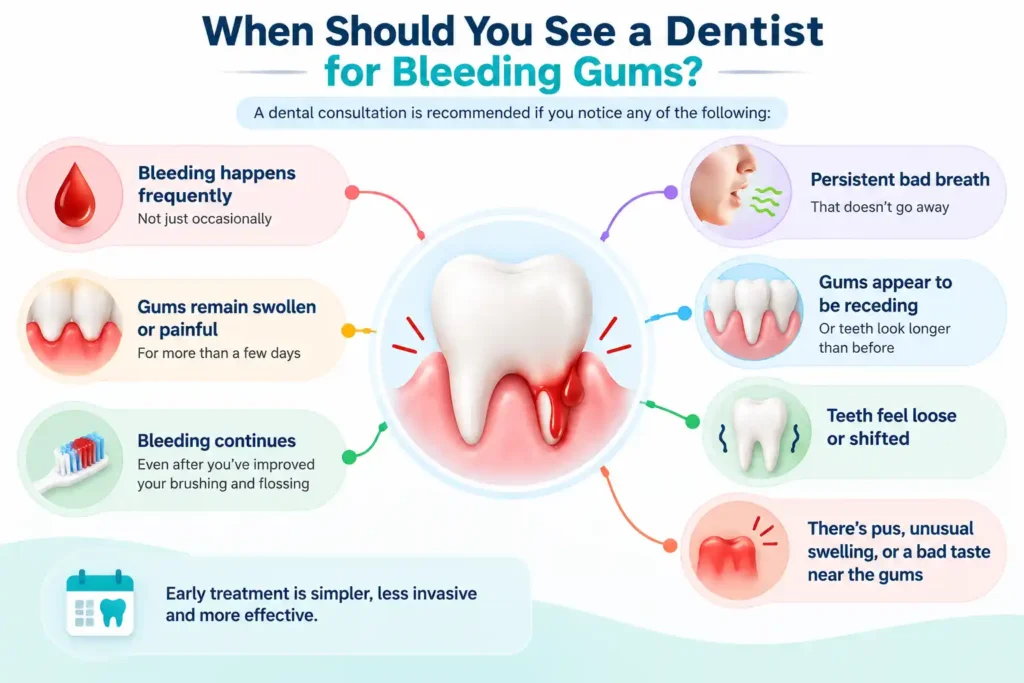
- Bleeding happens frequently, not just occasionally
- Gums remain swollen or painful for more than a few days
- Bleeding continues even after you’ve improved your brushing and flossing
- There’s persistent bad breath that doesn’t go away
- Gums appear to be receding or teeth look longer than before
- Teeth feel loose or shifted
- There’s pus, unusual swelling, or a bad taste near the gums
Waiting things out tends to work against you here — the earlier gum inflammation is treated, the simpler and less invasive the treatment usually is. If you’re also experiencing general tooth pain alongside the bleeding, our guide on tooth pain treatment near Bengali Square may help you figure out what’s going on.
Bleeding Gums Treatment in Indore at Sommyta Dental House
If you’re in Indore and dealing with gums that bleed regularly, it’s worth getting a proper dental examination rather than trying to self-diagnose. At Sommyta Dental House, the process usually starts with a straightforward assessment of your gums and teeth to understand whether the issue is plaque-related, tied to gingivitis, or something that needs a closer look.
Depending on what’s found, this may include a professional cleaning to clear out plaque and tartar buildup, a deeper cleaning if there are early signs of gum disease, and practical guidance on brushing and flossing techniques that actually protect your gums going forward, rather than just treating the immediate bleeding.
Gum problems tend to respond well when they’re caught early, and a single consultation is usually enough to know exactly where you stand and what the next step should be. You can check out the full range of treatments on the dental services page, or get in touch directly through the contact page to book an appointment.
How Can You Prevent Bleeding Gums?
Prevention is genuinely simpler than treatment in most cases, and it comes down to consistency more than anything else.
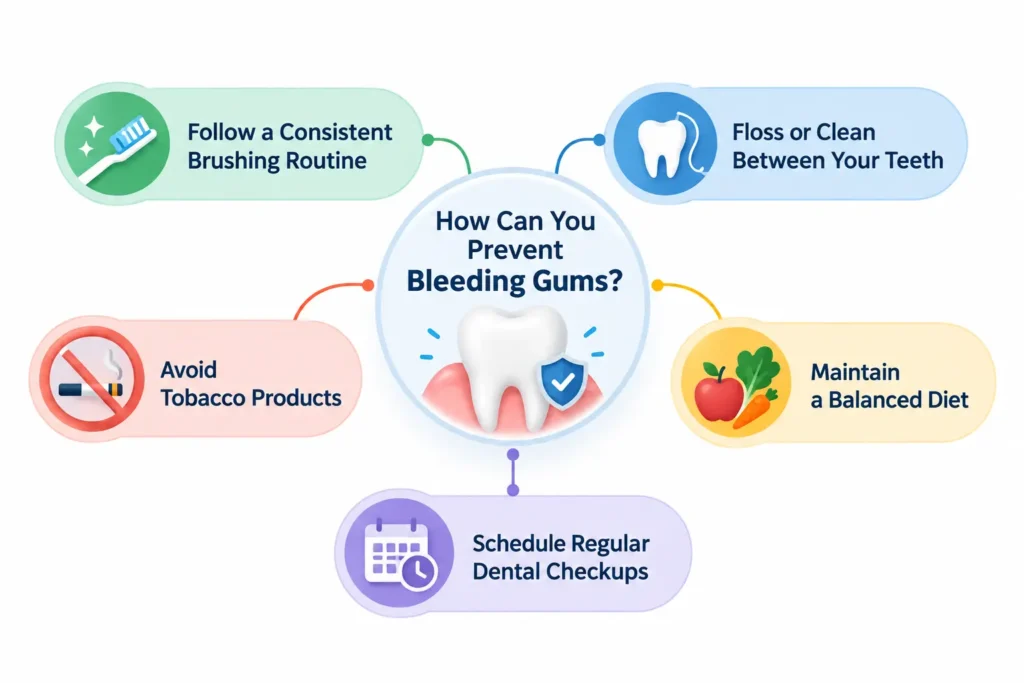
Follow a Consistent Brushing Routine
Brush twice a day with a soft-bristled brush, using gentle circular motions rather than hard scrubbing.
Floss or Clean Between Your Teeth
Make it a daily habit, not something you do only when food gets stuck. This is where most plaque buildup actually starts.
Avoid Tobacco Products
Smoking and tobacco use significantly increase the risk of gum disease and can also slow down healing.
Maintain a Balanced Diet
Foods rich in vitamin C and vitamin K support healthy gum tissue and proper healing.
Schedule Regular Dental Checkups
Even with excellent home care, professional cleanings every six months help remove tartar buildup that brushing alone cannot address, and let a dentist catch early warning signs before they turn into bigger issues.
The Ministry of Health and Family Welfare, Government of India also recommends routine dental checkups as part of general preventive healthcare, alongside good daily oral hygiene habits.
Frequently Asked Questions
Is it normal for gums to bleed while brushing?
Occasional, mild bleeding for example, after you start flossing again or switch to a firmer brush isn’t unusual. But regular or repeated bleeding is not something to consider “normal,” and it usually points to gum inflammation that needs attention.
How can I stop my gums from bleeding?
Switch to a soft-bristled toothbrush, brush gently twice a day, floss daily, and avoid skipping the areas that bleed. If bleeding continues beyond a week or two despite these changes, a professional cleaning is usually the next step.
Can bleeding gums be caused by plaque?
Yes. Plaque buildup along the gumline is the most common cause of bleeding gums. It irritates the gum tissue and leads to inflammation, which shows up as bleeding during brushing.
Does gum disease cause bleeding while brushing?
Yes, bleeding is one of the earliest and most common signs of gum disease, particularly gingivitis. If left untreated, it can progress to a more advanced stage called periodontitis.
When should I visit a dentist for bleeding gums?
If bleeding happens regularly, lasts more than a week despite better brushing habits, or comes along with swelling, bad breath, or loose teeth, it’s time for a proper dental checkup rather than waiting it out.
Can professional dental cleaning help bleeding gums?
Yes. Professional cleaning removes plaque and tartar from areas a toothbrush can’t reach, which is often the main cause of bleeding. Most people notice a clear improvement within a couple of weeks after a cleaning, combined with better home care.
Conclusion
Bleeding gums while brushing is easy to dismiss, but it’s usually your body’s way of pointing out that something plaque buildup, gum inflammation, or occasionally something else entirely needs attention. In most cases, it’s caused by gingivitis, which is mild and fully reversible with the right care. Left unaddressed for too long, though, it can progress to more serious gum disease that affects the structures holding your teeth in place.
Good oral hygiene at home goes a long way, but persistent bleeding really does deserve a professional look rather than guesswork. If you’ve noticed your gums bleeding for more than a week or two, it may be worth booking a checkup at Sommyta Dental House in Indore to get it properly assessed and treated before it turns into a bigger problem. You can learn more about the clinic on the About Us page or browse other dental health guides on the blog.